Line Impedance Stabilization Networks (LISN) – Basics and Overview
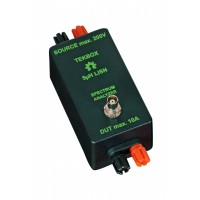
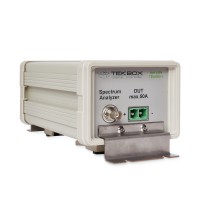
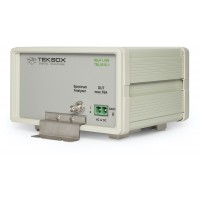
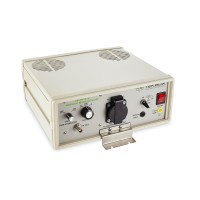
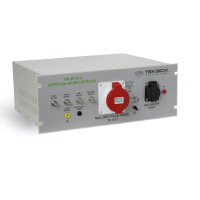
A line impedance stabilization network (LISN) is a device used in conducted and radiated radio-frequency emission and susceptibility tests, as specified in various EMC/EMI test standards. LISN are also sometimes referred to as artificial networks (AN) or artificial mains networks (AMN).
In conducted emission measurements, LISN are inserted into the supply lines of the equipment under test and provide an RF output to measure conducted emissions.
In many other test set-ups, LISN are inserted into the EUT supply lines just for the purpose of creating a defined source (supply) impedance.
The output impedance of a power supply (source) is hardly ever known and varies from source to source. EMC testing requires a well-defined and repeatable set up, which is created by placing a LISN in series with the source. The equipment under test does no longer see the output impedance of the source, but instead the specified impedance of the LISN.
How does it work?
If you want to measure conducted noise emissions, you could do it as simple as below:

It is definitely possible, to measure conducted emissions produced by the EUT, using this simple set up. However, the amplitude of the conducted emissions will be influenced by the impedance of the source. The source impedance is part of a voltage divider in the overall system and has a significant influence on the amplitude of the measured amplitude of the conducted emissions. As it is necessary to get the same results for the same EUT in any lab, anywhere, it is necessary to remove the impedance of the supply source from the equation.
The picture below shows how a LISN is inserted into the setup, in order to provide a defined impedance for the conducted emissions travelling on the supply lines of an equipment under test:

A LISN can be connected to any power supply and provide the same voltage and current capability as the power supply at the EUT terminals. However, the source impedance of the LISN is specified by EMC standards and enables repeatable conducted emission measurements in any laboratory.
Download the free application note (PDF file)
| Model |
Impedance |
Frequency Range |
Path |
Maximum Current |
Maximum Voltage |
EUT Socket |
Additional Features |
| TBL00705-2 |
50Ω // 0.7µH |
10 Hz – 200 MHz |
2 |
5 A |
0 - 60V DC |
4 mm banana |
- |
| TBL0110-2 |
50Ω // 1µH |
30 Hz - 500 MHz |
2 |
10 A |
0 - 60V DC |
4 mm banana |
- |
| TBL0225-2 |
50Ω // 2µH |
10 Hz - 200 MHz |
2 |
25 A |
0 - 60V DC |
4 mm banana |
- |
| TBOH01 |
5µH // 50Ω |
100 kHz – 110 MHz |
1 |
10 A |
200V |
4 mm banana |
- |
| TBL0550-1 |
5µH // 50Ω |
100 kHz – 150 MHz |
1 |
50 A |
0 - 60V DC |
Phoenix High current |
- |
| TBL05100-1-B |
50Ω // 5µH + 1Ω |
10 kHz – 400 MHz |
1 |
100 A |
1000V DC / 500V AC |
Phoenix High current |
Configurable topology |
| TBLM02 |
N/A (Separator) |
9 kHz - 110 MHz |
Separator |
N/A |
N/A |
BNC |
CM/DM Separator |
| TBL5008-2B |
50Ω ║ (50µH + 5Ω) |
9 kHz - 30 MHz |
2 |
8 A |
250V |
Country specific |
Artificial hand Switchable PE Independent BNC |
| TBL5008-2C |
50Ω ║ (50µH + 5Ω) |
9 kHz - 30 MHz |
2 |
8 A |
250V |
Country specific |
Artificial hand Switchable PE Limiter/highpass |
| TBL5016-1 |
50Ω // 50µH (+5Ω) |
9 kHz – 100 MHz |
1 |
16 A |
250V AC/DC |
Phoenix High current |
Configurable topology |
| TBL5016-2B |
50Ω ║ (50µH + 5Ω) |
9 kHz - 30 MHz |
2 |
16 A |
250V |
Country specific |
Artificial hand Switchable PE Independent BNC |
| TBL5016-2C |
50Ω ║ (50µH + 5Ω) |
9 kHz - 30 MHz |
2 |
16 A |
250V |
Country specific |
Artificial hand Switchable PE Limiter/highpass |
| TBL5016-3-EU |
50Ω ║ (50µH + 5Ω) |
9 kHz - 30 MHz |
3 |
16 A |
540V / 260V |
CEE/IEC60309 |
Artificial hand Switchable PE |
| TBL5032-3-EU |
50Ω ║ (50µH + 5Ω) |
9 kHz - 30 MHz |
3 |
32 A |
540V / 260V |
CEE/IEC60309 |
Artificial hand Switchable PE |
| TBL50100-1 |
50Ω // 50µH |
9 kHz - 100 MHz |
1 |
100 A |
250V AC/DC |
Phoenix High current |
- |
| TBLDC32-2 |
150Ω (CM/DM) |
9 kHz - 30 MHz |
2 |
32 A |
1000V DC |
4mm safety |
Rotary switch (A, B, CM, DM) |











Leave a Comment