With the rise of Artificial Intelligence workloads, 2026 data centers have undergone a radical transformation: racks exceeding 70 kW, the massive introduction of Liquid Cooling, and AI-tolerant electrical infrastructures. Periodic maintenance can no longer be limited to visual tests; it requires precision diagnostic instrumentation operating on three pillars: predictability, signal integrity, and fluid thermodynamics.
Below is a detailed analysis of the indispensable tools for specialized technicians.
1. Electrical Diagnostics and Predictive Analysis
In an environment where a micro-peak in voltage can crash thousands of GPUs, power quality is the top priority.
- Class A Network Analyzers (Power Quality): Instruments such as the Fluke 1770 or similar are necessary to capture ultra-fast transients, harmonics, and phase imbalances. In modern data centers, they monitor the impact of the high-efficiency switching power supplies used in AI servers.
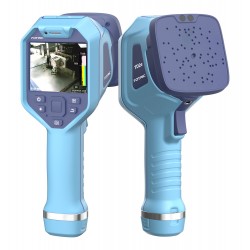
- Ultrasonic Acoustic Cameras (e.g., FOTRIC H6+): Represent the latest frontier for detecting partial discharges or "arcing" in medium-voltage panels and busbars, often imperceptible to the human ear or traditional thermal cameras.
- High-Resolution Thermal Cameras with Radiometric Analysis: Essential for mapping "hot spots" in electrical panels. The resolution must be high enough to identify loose terminals or undersized cables in ultra-high-density racks.
2. Data Integrity: 400G/800G Certification
Next-generation data centers utilize ultra-high-speed fiber optic interconnects. Cabling maintenance requires tools that go far beyond a simple "link test."
- MPO/MTP Fiber Optic Certifiers: With the proliferation of 400G and 800G transceivers, it is fundamental to use certifiers that support 12/16/24-fiber MPO connectors.
- Digital Inspection Microscopes: Cleanliness is the number one cause of failure. Microscopes with automatic "pass/fail" analysis according to the IEC 61300-3-35 standard are mandatory to verify connector end-face contamination before insertion into expensive AI switches.
- High-Resolution OTDR (Optical Time Domain Reflectometer): To locate micro-bends or faulty splices on very short spans, typical of inter-rack connections.
3. Liquid Cooling System Maintenance (DLC/Immersion)
The introduction of Direct-to-Chip (DTC) systems and Coolant Distribution Units (CDU) requires tools that belong more to precision hydraulics than electronics.
- Digital Refractometers: To measure the concentration of glycol or corrosion inhibitors in the coolant. An incorrect mixture can lead to deposits that obstruct the micro-channels of cold plates on CPUs/GPUs.
- Conductivity and pH Meters: Essential for closed-loop systems to prevent galvanic corrosion between dissimilar metals (e.g., copper cold plates and aluminum radiators).
- Ultrasonic Liquid Leak Detectors: To identify microscopic leaks along flexible tubing and "quick-disconnect" connectors inside racks, where liquid flows near live components.
4. Environmental Verification and IoT Sensors
Modern maintenance integrates closely with management software (DCIM).
- Hot-Wire Anemometers: To calibrate airflow in hybrid (air/liquid) systems and verify that "containment" (hot/cold aisle) works without turbulence that would reduce efficiency (PUE).
- 3D Laser Scanners (BIM-to-Field): Periodically used to verify that new rack installations do not obstruct airflows or safety paths, comparing the "as-built" status with the data center's digital twin.

Instrumentation Summary Table
| Field |
Key Instrument |
Critical Function |
| Electrical |
Class A Network Analyzer |
Transient and harmonic analysis |
| Predictive |
Ultrasonic Camera |
Detection of invisible partial discharges |
| Network |
MPO/MTP Certifier |
Fiber testing for 400G/800G |
| Cooling |
Digital Refractometer |
Chemical verification of coolant fluid |
| Safety |
Radiometric Thermal Camera |
Fire and overheating prevention |
Conclusion and Certifications
Maintenance of an "AI-Ready" data center requires an investment in instrumentation that is proportional to the criticality of the processed data. The fundamental shift is toward condition-based maintenance: interventions occur not because a year has passed, but because the tools (and the AI analyzing sensor data) signal an anomaly before it becomes system downtime.
To correctly operate the advanced instrumentation described and ensure maximum reliability in a next-generation data center, technicians must hold a set of certifications covering electrical safety, fluid management, and specialist ICT skills.
1. Electrical Safety (European/Italian Regulations)
This is the mandatory legal basis for anyone opening an electrical panel or using network analyzers.
- PES - PAV - PEI (Standard CEI 11-27):
- PES (Expert Person): For those with sufficient education and knowledge to analyze risks and operate autonomously.
- PAV (Instructed Person): For those operating under the supervision of a PES.
- PEI (Eligible Person): Indispensable for live working on low voltage systems (essential to avoid shutting down racks during maintenance).
Note: As of 2026, the VI Edition of Standard CEI 11-27 is in effect, placing even greater emphasis on operational procedures and arc flash risk assessment.
2. Fiber Optics and Network Infrastructure
Required to use MPO/MTP certifiers and OTDR analyzers on 400G/800G networks.
- FOA (Fiber Optic Association) - CFOT/CFOS: The international reference certification for fiber specialists. Specifically, the CFOS/D (Design) or CFOS/T (Testing & Maintenance) modules guarantee competence in using measurement instruments.
- BICSI Technician (TECH): Certifies that the technician understands structured cabling standards and can perform advanced diagnostics following global best practices.
3. Cooling and Fluids (Liquid Cooling & HVAC)
With the introduction of liquid cooling, hydraulic and chemical competencies become crucial.
- F-Gas Certificate (EU Regulation 2024/573): Mandatory for handling refrigerant gases in cooling units (CRAC/CRAH). Without this, intervention on refrigeration machines is not permitted.
- Liquid Cooling Procedures Certification (Vendor-Specific): Many manufacturers (such as Schneider, Vertiv, or CoolIT) issue specific certifications for the maintenance of CDUs (Coolant Distribution Units) and "Direct-to-Chip" liquid circuits.
4. Strategic Data Center Management
These "high-level" certifications are often required for team leaders or maintenance managers to coordinate interventions risk-free.
- Uptime Institute - Accredited Tier Specialist (ATS): Fundamental for understanding the "Tier" philosophy and how to perform concurrent maintenance (working without service interruption).
- EPI - CDCP / CDCS (Data Center Certified Professional/Specialist): Globally recognized certifications covering all aspects of infrastructure, from power to cooling.
Certification Summary by Instrument
| Instrument |
Required Certification |
| Network Analyzer / Thermal Camera |
PES-PAV-PEI (CEI 11-27) |
| Fiber Certifier / OTDR |
FOA (CFOT) or BICSI Technician |
| Cooling Unit Maintenance |
F-Gas Certificate |
| CDU / Liquid Cooling Testing |
Vendor-specific Certification |








Leave a Comment