The Moku Time & Frequency Analyzer is easy to use and offers a range of advanced capabilities to optimize your experiment. Available on Moku:Pro, Moku:Lab and Moku:Go.

Time & Frequency Analyzer
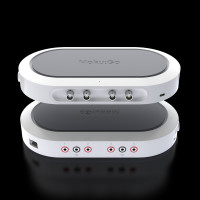
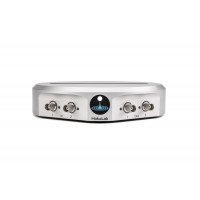
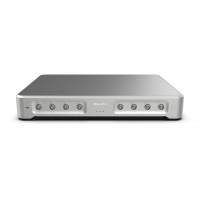
Available on Moku:Delta, Moku:Pro, Moku:Lab and Moku:Go hardware

Overview
Count events with a timing jitter of less than 20 ps RMS with the Moku Time & Frequency Analyzer. Feed configurable event detectors into up to four ultra-precise interval analyzers to replace your frequency counter, event counter, photon counter, and more - all with one versatile instrument with real-time, on-device histograms and interval statistics. The Moku Time & Frequency Analyzer is easy to use and offers a range of advanced capabilities to optimize your experiment.

Key benefits
With ultra-low timing jitter, an integrated Data Logger, and zero dead-time statistics and on-device histograms, the Moku Time & Frequency Analyzer accelerate experiment timelines and increase data interpretation efficiency.

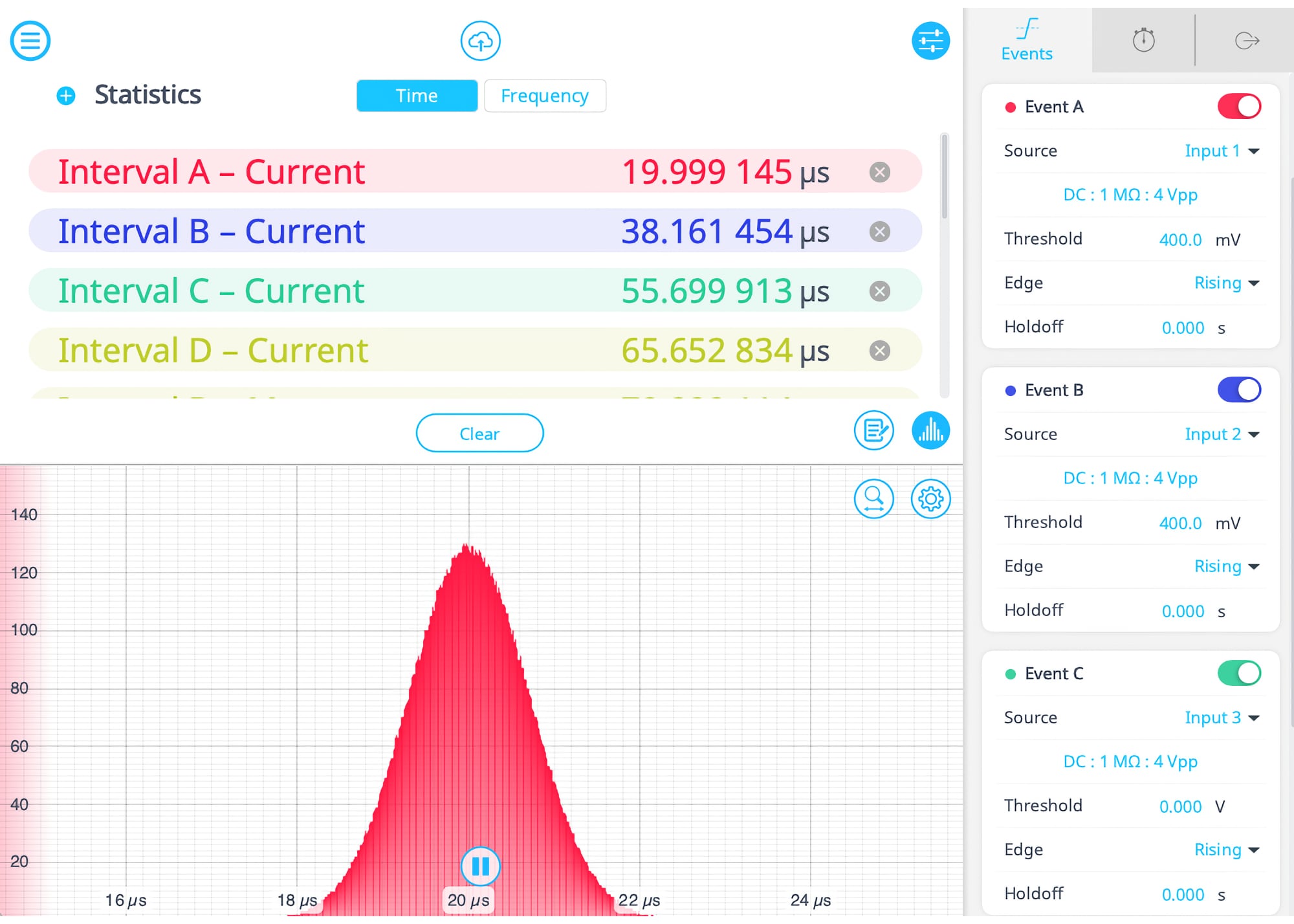
Analyze lossless, real-time histograms
Accumulate measurement outcomes over time. With a minimum bin-width of 0.78 ps, it’s easy to observe timing errors, perform time-correlated single photon counting, and more. Capture and display trillions of events without streaming gigabytes of data to a computer for offline processing.

Configure event detector thresholds
Program up to four event thresholds and up to four time intervals using any combinations of two events. Collect lossless distributions of any time interval such as rise and fall times, pulse widths, or duty cycle.
Log raw event timestamps
Log timestamps to onboard storage or a file for maximum flexibility in post-processing. Export histograms, waveform statistics, or logged data for further analysis.

Output a scaled voltage proportional to an interval
Bridge the gap between time and other measurement domains. Convert time to an amplitude to decode pulse-width modulated signals, control laser power, and more. Combine the Time & Frequency Analyzer with the PID Controller in Multi-instrument Mode to build a closed-loop control system.
Engineered to work seamlessly with your preferred APIs
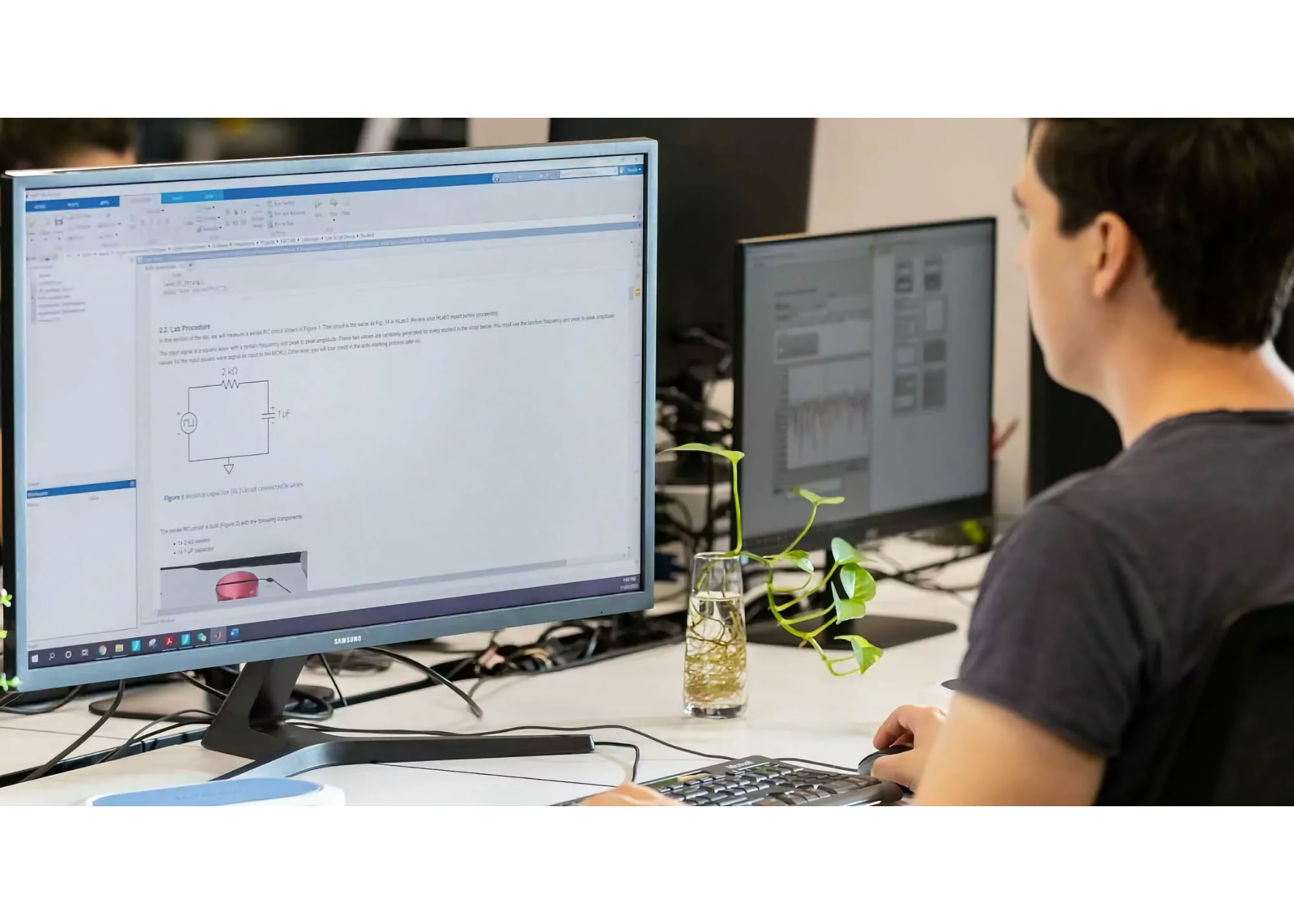
API integration with Python, MATLAB, and LabVIEW allows straightforward automation of your Moku device in complex setups or for repetitive tasks. Save your measurements, screenshots, traces, and other settings locally or to your preferred cloud app. You can also send work to yourself or colleagues within the Moku app.
Engineered for demanding applications
Use the Moku Time & Frequency Analyzer to accelerate development timelines with speed and flexibility unmatched by any other instrument in its class.

Photon counting

Oscillator characterization

Free-space optical communications

Jitter analysis

Pulse-width modulation decoding
Specifications and technical documents
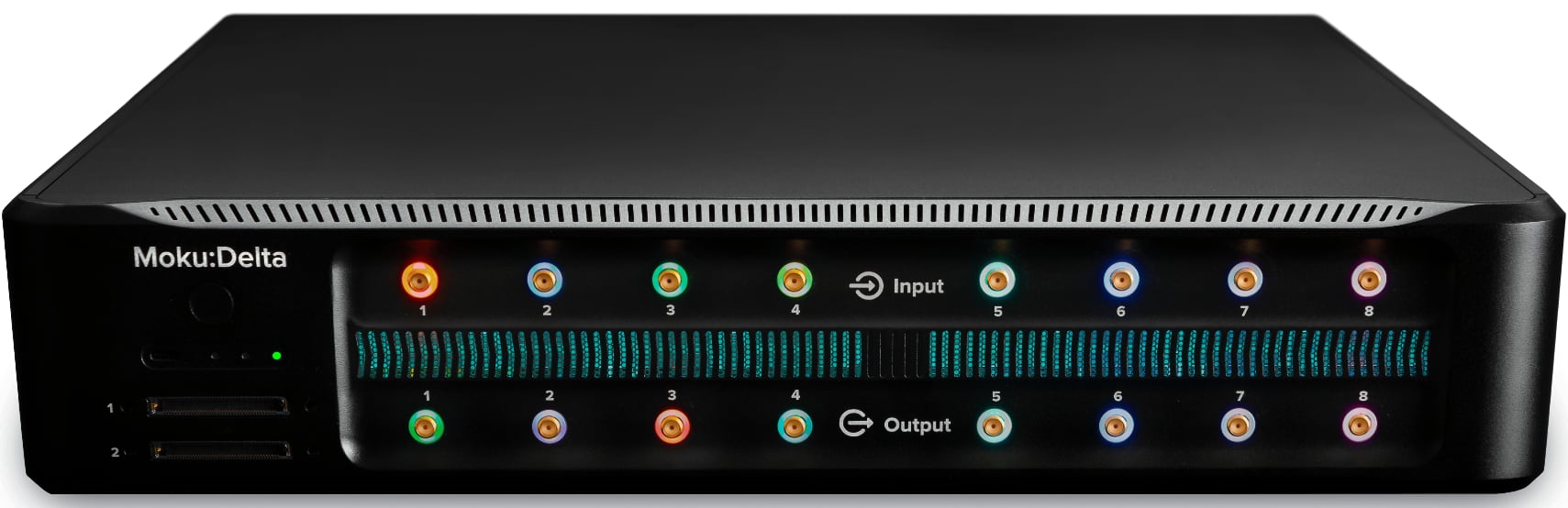
The Moku Time & Frequency Analyzer runs on Moku:Delta, Moku:Pro, Moku:Lab and Moku:Go. Compare the specifications to choose the right device for your application.
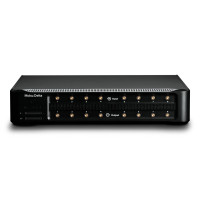
Moku:Delta
Channels/Event detectors
8
RMS jitter
< 20 ps
Clock stability
1 ppb
Digital resolution
0.2 ps
Maximum interval rate
312.5 MHz
Software & Utilities
Windows, macOS, iPadOS, and visionOS apps
API support for Python, MATLAB, and LabVIEW

Moku:Pro
Channels/Event detectors
4
RMS jitter
< 20 ps
Clock stability
300 ppb
Digital resolution
0.78 ps
Maximum interval rate
150 MHz
Software & Utilities
Windows, macOS, iPadOS, and visionOS apps
API support for Python, MATLAB, and LabVIEW

Moku:Lab
Channels/Event detectors
2
RMS jitter
< 20 ps
Clock stability
500 ppb
Digital resolution
1.95 ps
Maximum interval rate
125 MHz
Software & Utilities
Windows, macOS, iPadOS, and visionOS apps
API support for Python, MATLAB, and LabVIEW

Moku:Go
Channels/Event detectors
2
RMS jitter
< 50 ps
Clock stability
25 ppm
Digital resolution
7.8 ps
Maximum interval rate
15 MHz
Software & Utilities
Windows, macOS, iPadOS, and visionOS apps
API support for Python, MATLAB, and LabVIEW










Leave a Comment