In the landscape of workplace safety, the correct identification of Personal Protective Equipment (PPE) is not just a matter of bureaucracy, but a fundamental pillar for safeguarding the health of workers. The reference legislation at the European level, Regulation (EU) 2016/425, establishes the essential health and safety requirements that manufacturers must respect.
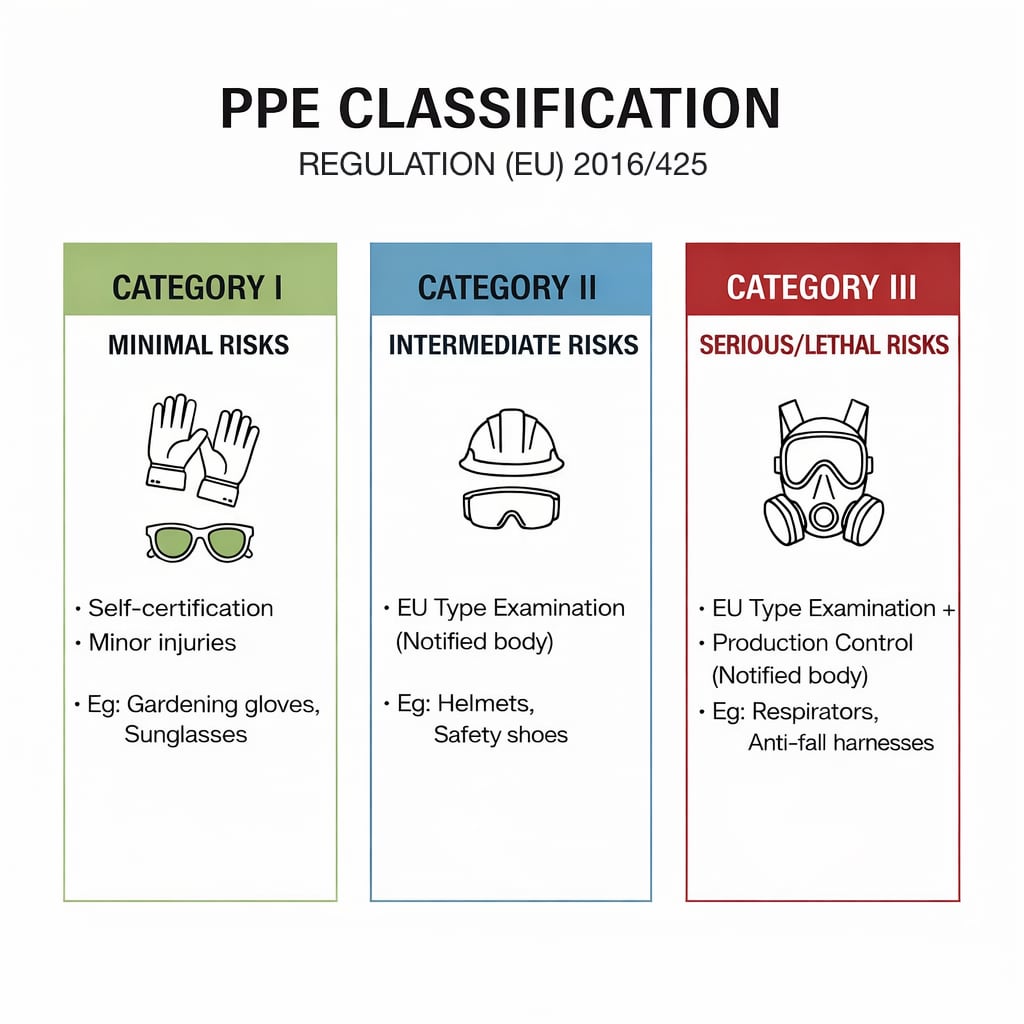
The key criterion determining the classification of PPE is the magnitude of risk from which the device must protect. Based on this, PPE is divided into three main categories, each with increasingly stringent certification processes and control obligations.
1. Category I: Minimal Risks
The first category includes devices designed to protect users from risks that cause minor damage, the effects of which are perceivable in good time and do not compromise long-term health.
Characteristics and Covered Risks
Category I PPE is intended for scenarios where the danger is limited, such as:
- Superficial mechanical injury (e.g., small cuts or abrasions from gardening).
- Contact with cleaning materials of weak action or prolonged contact with water.
- Contact with hot surfaces not exceeding 50 °C.
- Damage to the eyes due to exposure to sunlight (excluding direct observation of the sun).
- Atmospheric conditions that are not of an extreme nature.
Certification
For this category, the manufacturer is responsible for the EU Declaration of Conformity through a self-certification procedure (Module A). The intervention of a Notified Body is not required.
2. Category II: Intermediate Risks
This is a "residual" category, which includes all PPE that does not fall into either minimal risk protection (Cat. I) or protection against risks that may cause very serious consequences or death (Cat. III).
Characteristics and Examples
This range includes most PPE used in the industrial and craft sectors that offer protection against significant impacts, crushing, or cuts:
- Safety helmets for industry or sports use.
- Safety footwear (not specific to extreme electrical or chemical risks).
- Goggles and visors for protection against flying shards or dust.
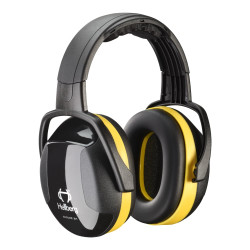
- Hearing protectors (earplugs and earmuffs), although often the subject of regulatory debate due to their importance in preventing irreversible damage.
Certification
The certification process requires the intervention of a Notified Body, which must subject the device to the EU type-examination (Module B), verifying that the prototype meets the requirements of the Regulation.
3. Category III: Serious or Fatal Risks
Category III represents the maximum level of protection. These PPE are designed to safeguard the worker from risks that can lead to death or irreversible damage to health.
Types of Risk
Devices belong to this category if they protect against:
- Hazardous substances and mixtures for health (chemical and biological agents).
- Oxygen-deficient atmospheres.
- Harmful biological agents.
- Ionizing radiation.
- High-temperature environments (effects comparable to an air temperature of at least 100 °C).
- Low-temperature environments (effects comparable to an air temperature of -50 °C or lower).
- Falling from a height.
- Electric shock and live working.
Controls and Obligations
In addition to the EU type-examination (Module B), Category III imposes continuous production monitoring. The manufacturer must choose between:
- Module C2: Internal production control plus supervised product checks at random intervals.
- Module D: Quality assurance of the production process (periodic audits of the quality system).
Technical Note: For Category III PPE, specific training (in addition to education and information) is mandatory, as the correct positioning and use of the device are critical for survival.
Summary of Categories
| Category |
Risk Level |
PPE Example |
Certification |
| I |
Minor / Minimal |
Gardening gloves |
Self-certification |
| II |
Intermediate |
Safety helmet, standard glasses |
Notified Body (Type Exam) |
| III |
Serious / Fatal |
Harnesses, respiratory equipment |
Notified Body + Production Control |
Conclusion
Determining the category of a PPE is fundamental not only for the manufacturer, who must follow precise regulatory procedures, but above all for the employer and the Safety Manager, who must evaluate the suitability of the device with respect to the residual risks present in the company.










Leave a Comment