
-
U heeft nog geen producten in uw winkelwagen.

U heeft nog geen producten in uw winkelwagen.
Introduction
Recently, electromobility has seen accelerated adoption in virtually all industrialized countries. It is predicted that by 2040 the number of electric vehicles on the road will reach 500 million [1]. The expected growth of the EV market has to be accompanied by the development of an appropriate charging infrastructure. DC charging allows for much faster charging compared to AC, and it is the preferred method for EV recharging, especially for long distance trips.
This application note will give an overview of DC charging systems and illustrate how to best leverage the unique feature set of ZES ZIMMER’s LMG600 series series precision power analyzers in order to optimize efficiency and performance of those fast chargers.
DC charging systems
DC charging systems consist of a line filter, an AC-DC converter and an isolated DC-DC converter typically containing a high frequency transformer. The filter aims to smooth the DC current and to reduce the harmonic currents caused by the AC-DC rectifier stage. The AC-DC rectifier stage regulates the power factor and creates a constant DC voltage for the DC-DC converter. The last stage controls the DC charging current for better response of the DC-DC converter [3].
DC fast charger systems can be classified as unidirectional or bidirectional [2]. Unidirectional chargers can only draw power from the grid but cannot feedback power into the grid. Bidirectional charging provides a two-way flow of the electrical energy, with the drawback of the repeated charging/discharging cycles leading to battery degradation. If necessary, galvanic separation can be achieved in such systems by using a high frequency transformer.
How to measure power on DC Chargers
An overview of the system and where the measurement equipment gets connected is illustrated in Figure 1. The voltages and currents can be measured simultaneously on all three AC phases and on the DC side between the converter and the battery.
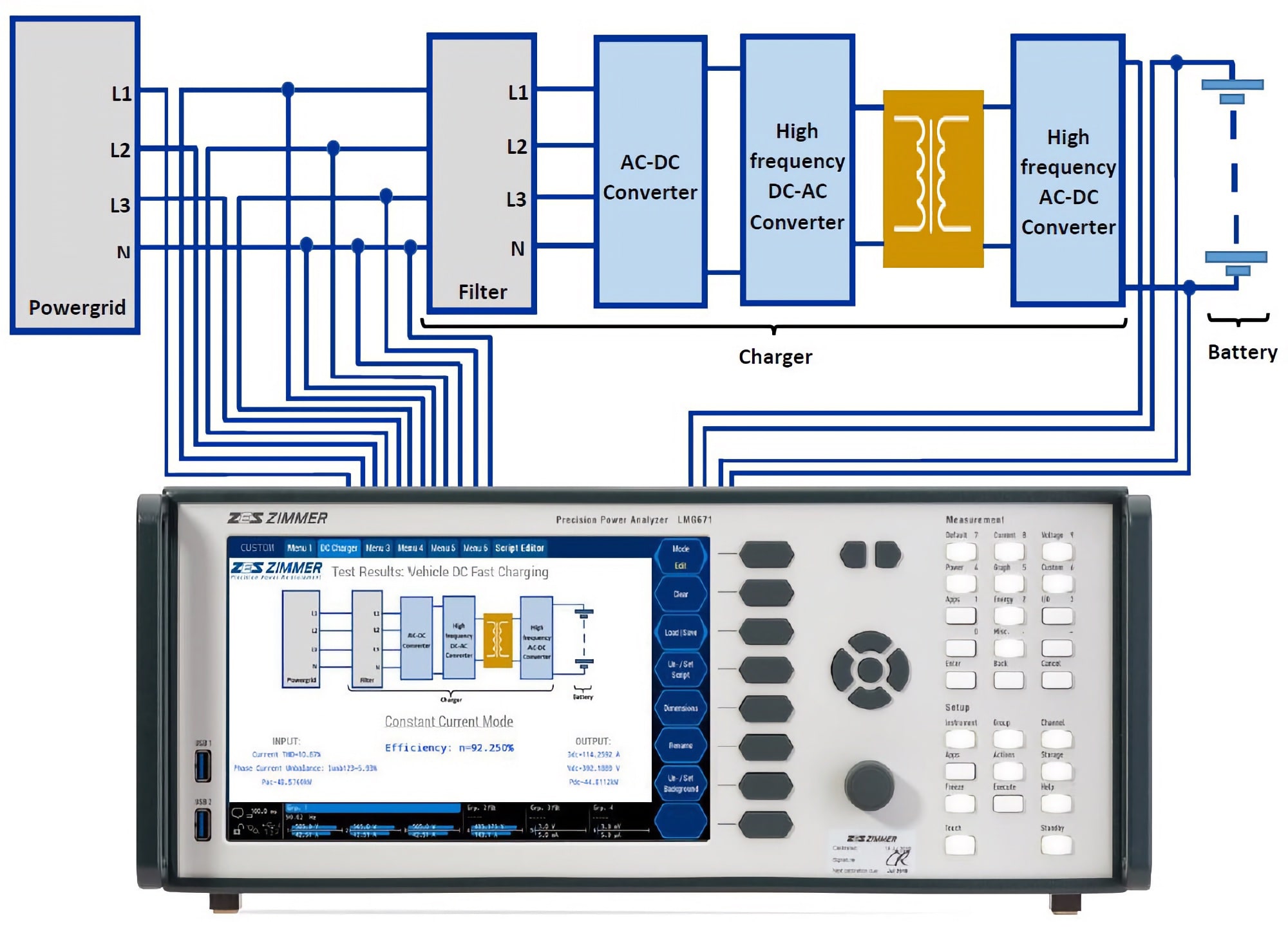
Figure 1: General Measurement Setup
The right power channel type for your requirements
The LMG600 series can be equipped with up to 7 different channels to measure the energy produced by the charger, the efficiency of the system, the energy drawn from the grid and many more measurements. The LMG offers three different channel types, which can conveniently be combined in the same chassis to ensure that the measuring device is tailored to the needs of the particular application. Users can choose between A, B or C channels with the following accuracies and bandwidths:
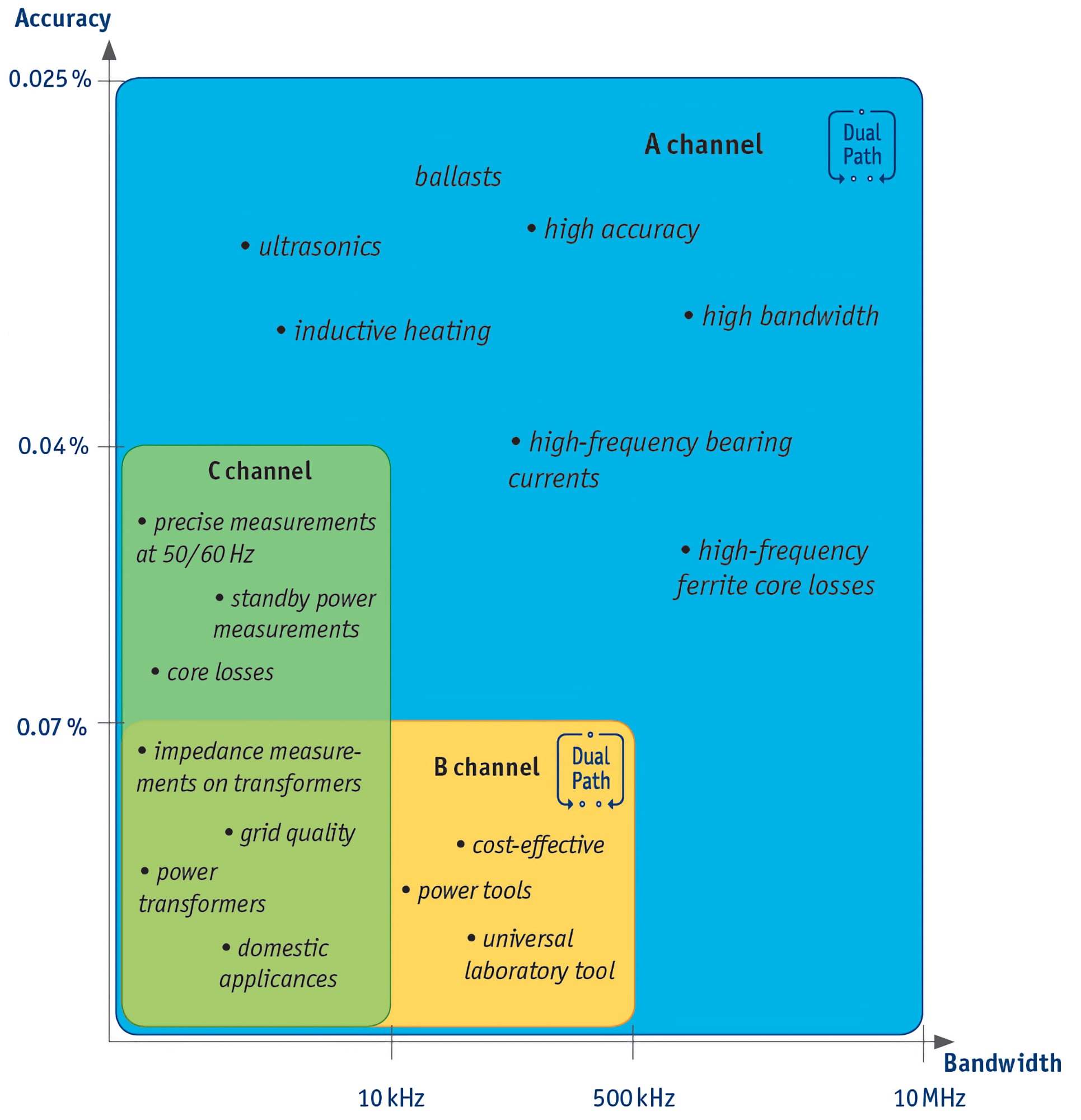
Figure 2: LMG600 Series A, B and C channels with their analog bandwidth and accuracy
The LMG671 with its capability of housing up to 7 power channels in a single chassis provides highly precise simultaneous measurement and analysis of all relevant parameters as voltage, current, power and more of the whole DC charger system without requiring a second instrument.
The ability of the LMG671 to perform up to 7 power input measurements simultaneously makes it possible to test and evaluate the power measurements and efficiency of all different converter topologies which are accommodated within the DC charger. A practical implementation is illustrated in Figures 3&4. Therefore, the LMG671 high precision power analyzer makes it easy for R&D engineers who design and test EV chargers to access all important measurements efficiently and most importantly without any compromises.
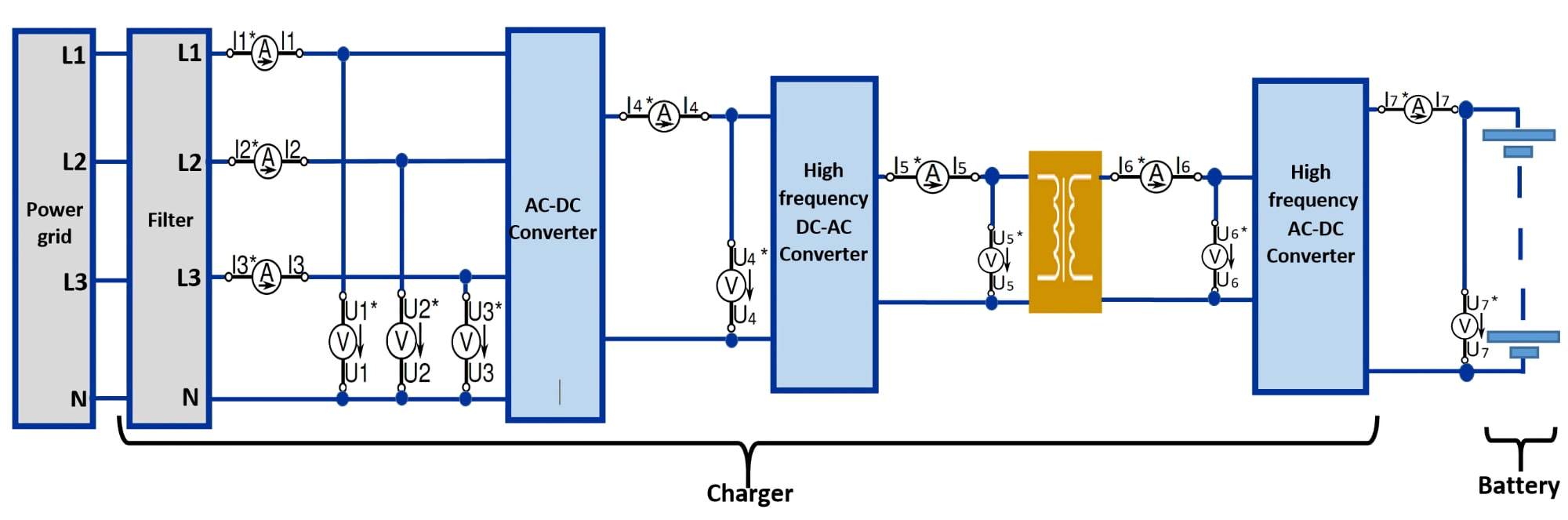
Figure 3: Logical connection of the system

Figure 4: Practical connection implementation utilizing simultaneously all 7 channels of the LMG671
Determining power conversion efficiency
All resulting efficiencies between various inputs and outputs can be displayed in an easy and straightforward manner. To help focus on particular results, the LMG600 offers a convenient way to customize screens according to the demands of the application. The measurement results can be made more meaningful by adding a descriptive title and illustrating the numerical results with a schematic depiction of the setup and other graphical elements.
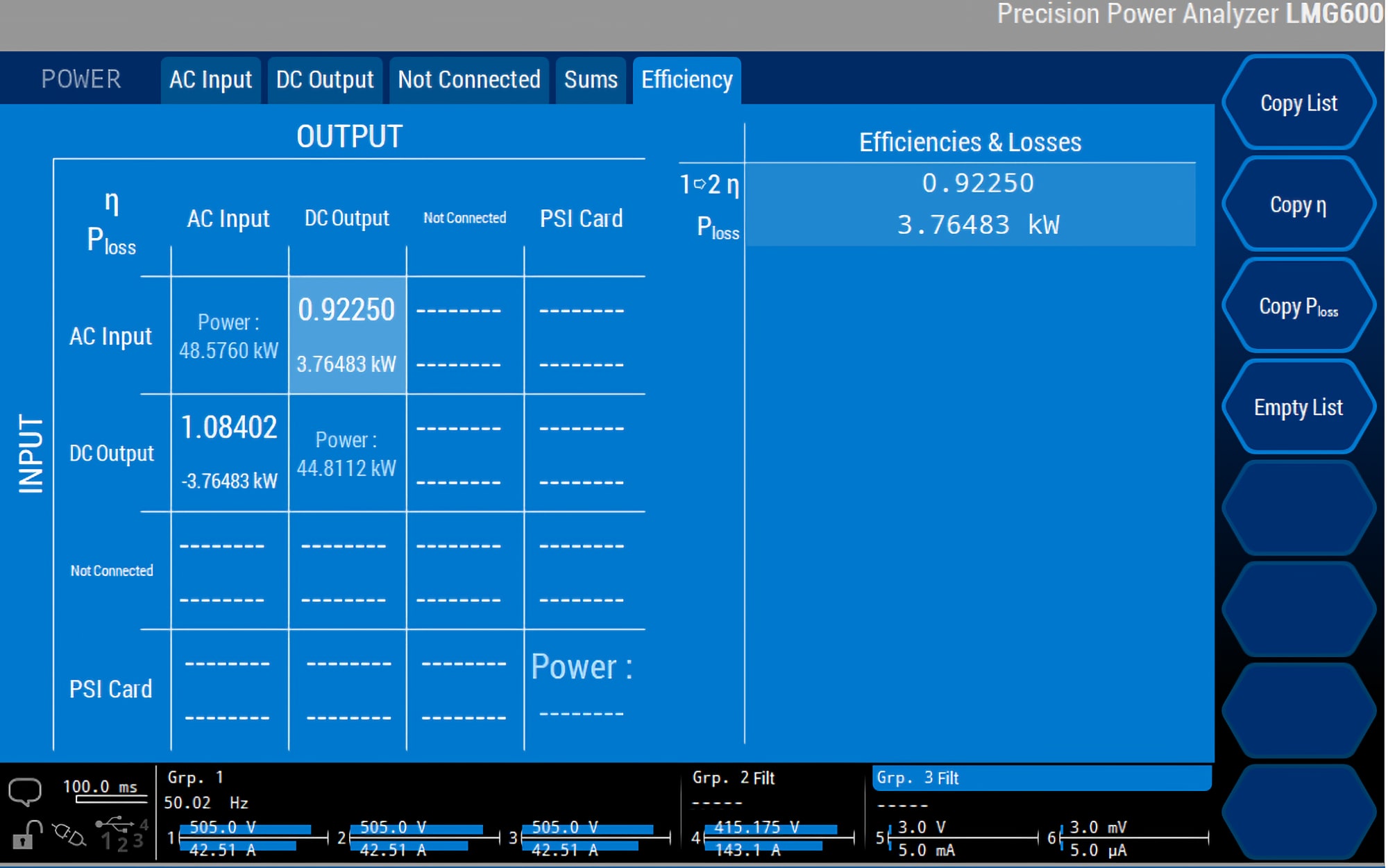
Figure 5: Efficiency results of a DC charger
Fully Customized Menu
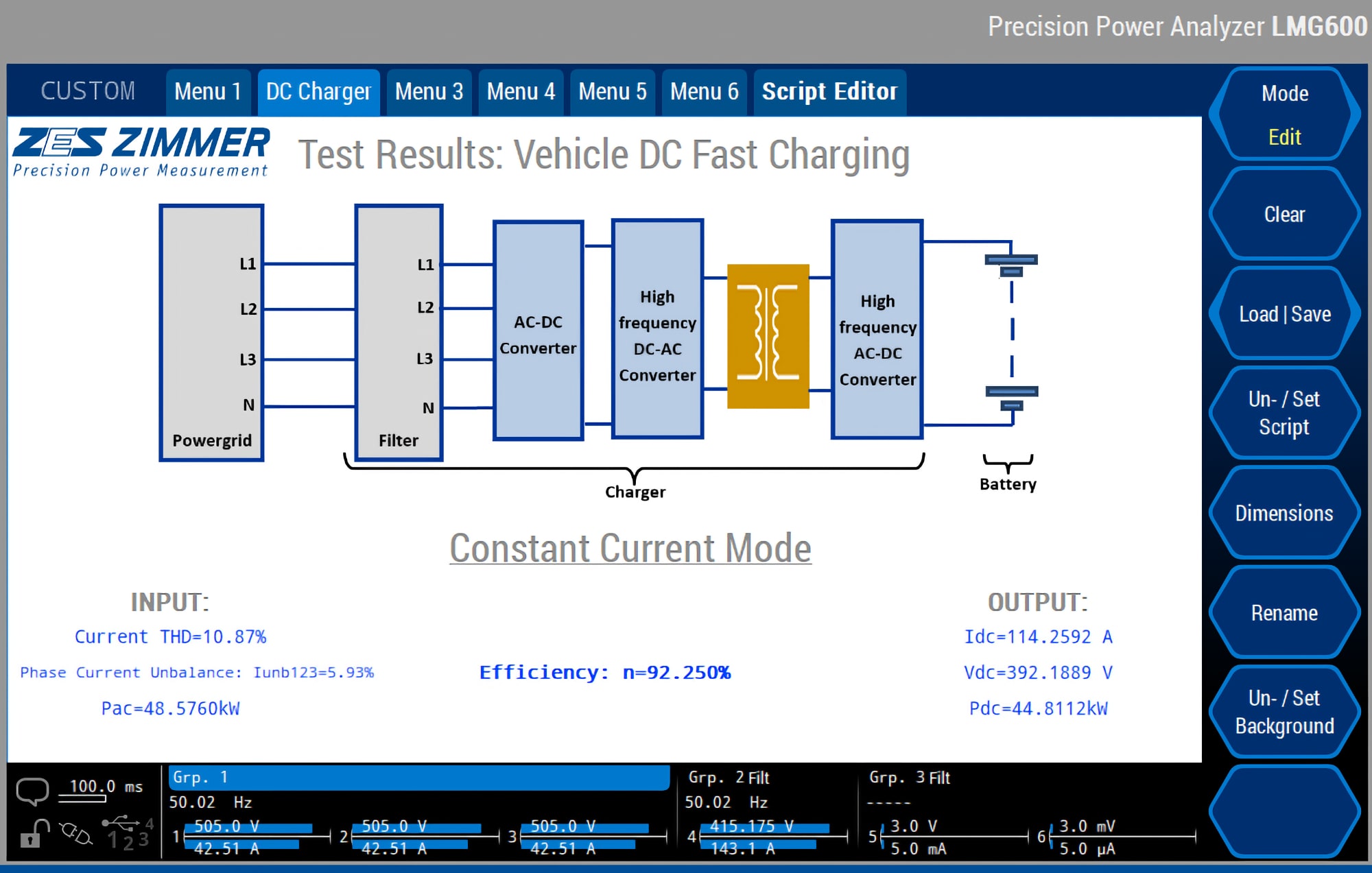
Figure 6: Fully customized menu
Let the Script Editor make your life easier
The LMG600 series is equipped with a powerful script editor which offers a vast variety of mathematical, logical and procedural programming functions like loops and conditional execution of commands. Transferring variables between script and GUI could not be easier, offering thus virtually unlimited possibilities.
An excellent example to illustrate the enormous benefits of the script editor for measurements on DC charging applications is the convenient determination of the utility grid voltage and current unbalance. In an ideal, balanced three phase system the individual phases of a voltage or current source have the same amplitude and frequency at 120° phase difference with one another. Monitoring the percental unbalance of the supply voltage and current to ensure that the unbalance limits are met is a necessity. The voltage unbalance factor in many European countries on LV and MV is expected to be less than 2%.
The following equations can be used [4]:
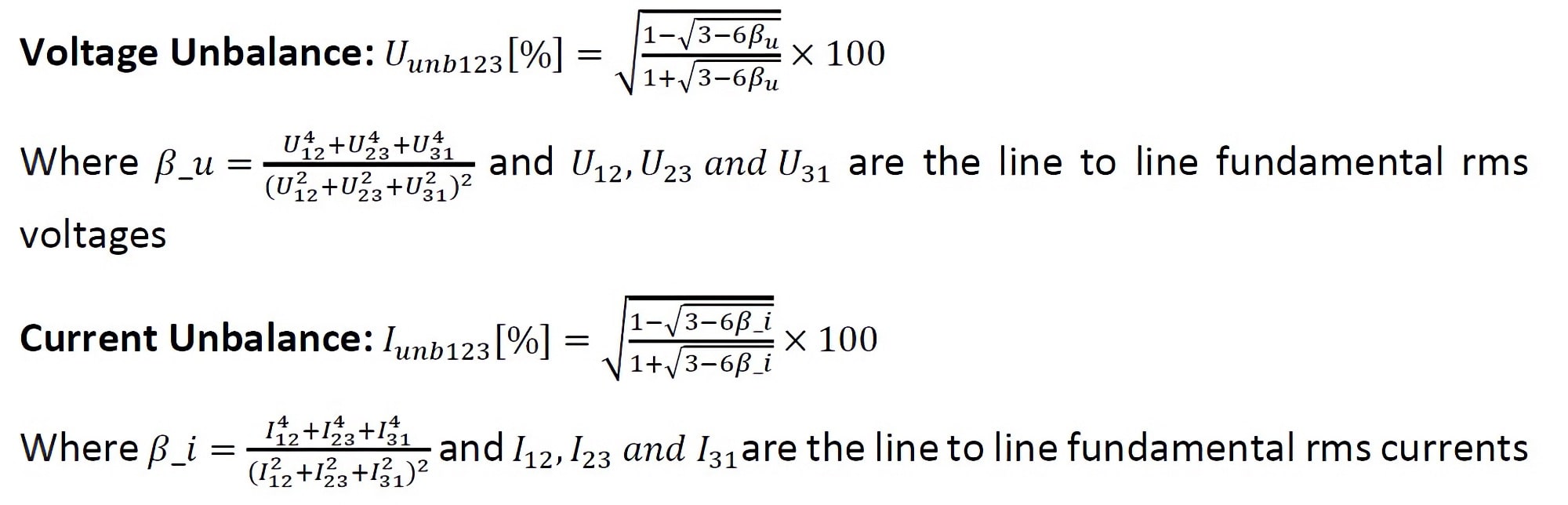
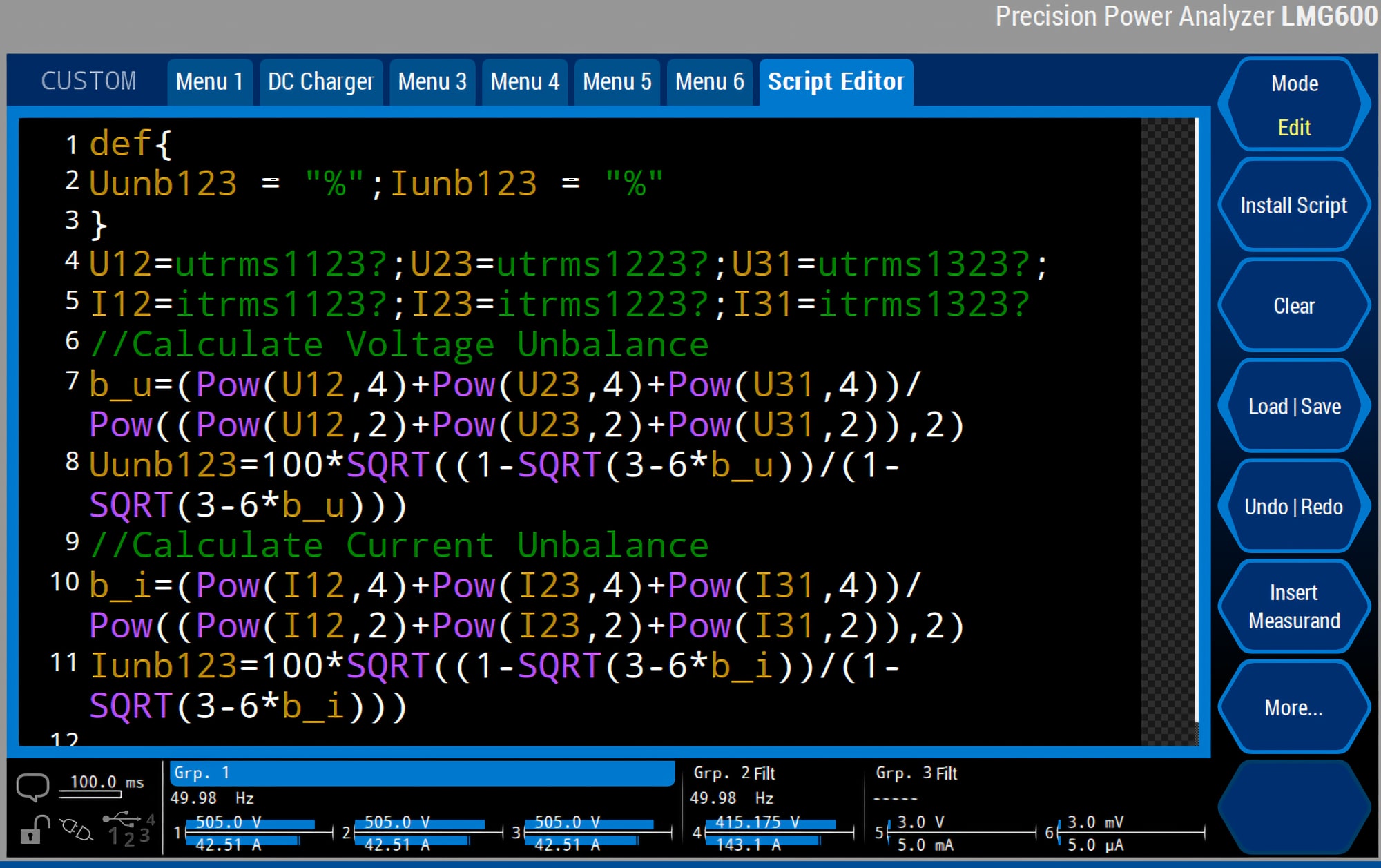
Figure 7: Script commands to calculate current and voltage unbalances
Log and post-process the power data of the DC Charger
Record a wide range of parameters over a long period. For example:
- Voltage, current, power, PF, frequency, harmonics etc.
- Analog and digital processing signals
Export the recorded data into Excel, Matlab or Octave formats to post-process and view the data.

Figure 8: Export of recorded data into CSV or Matlab/Octave formats
The waveforms in Figures 9 and 10 have been post-processed in Matlab, after exporting the log data into Matlab format:

Figure 9: DC current and voltage vs time during fast charge event

Figure 10: AC&DC power vs time during fast charge event
Summary
The accelerated deployment of DC charging infrastructure across the globe has increased the demand for fast, convenient, robust and reliable product testing and verification, from early R&D stage to manufacturing. This application note describes how to get meaningful results quickly and easily using the LMG600 series of power analyzers.
The LMG600 can measure all required parameters, derive all necessary values, display them in the desired manner, record them over time and share them with other applications in various formats. This unique all-in-one architecture eliminates the need to employ a multitude of tools, thus reducing the complexity of the measurement setup, avoiding unnecessary handover points and minimizing the risk of conversion errors, media disruption and incompatibilities. It allows for maximum automation and minimal manual intervention, which helps to streamline the testing process for optimal speed, accuracy and reliability.
References
[1] J.Baraniak, J.Starzynski, “DC Charger Simulation Results Compared to Measurements”, Conference: 2018 19th International Conference "Computational Problems of Electrical Engineering" (CPEE), Sep.2018
[2] J. Channegowda, V. K. Pathipati, S. S. Williamson, “Comprehensive Review and Comparison of DC Fast Charging Converter Topologies: Improving Electric Vehicle Plug-to-Wheels Efficiency”, IEEE 24th International Symposium on Industrial Electronics (ISIE), June 2015
[3] S. Chakraborty, Hai-Nam Vu, M.Hasan, D. Tran, M.Baghdadi, O.Hegazy, “DC-DC Converter Topologies for Electric Vehicles, Plug-in Hybrid Electric Vehicles and Fast Charging Stations: State of the Art and Future Trends”, Energies 2019, April 2019
[4] G.Burchi, C.Lazaroiu, N. Golovanov, M. Roscia, “Estimation of Voltage Unbalance in Power Systems Supplying High Speed Railway”, Electrical Power Quality and Utilisation, Journal Vol.XI, No.2, 2005









Leave a Comment