Case Sharing | Application Example of Optically Isolated Probes in Double Pulse Testing of Electric Vehicle Motor Controllers
The motor controller is one of the key components of the electronic control system in new energy vehicles. It is responsible for converting direct current from the battery into alternating current to power the motor. In this process, the core power devices are typically MOSFETs or IGBTs made of SiC or GaN materials, which handle energy conversion and power control. To ensure motor controller performance and reliability, these power devices must undergo rigorous testing, including double pulse tests.
Case Introduction
Double pulse testing helps engineers evaluate key parameters of power devices in motor controllers, including switching speed, switching losses, and voltage/current waveforms, thereby optimizing controller design. However, measuring the upper arm Vgs during double pulse testing presents technical challenges. It requires the measurement system to have not only high bandwidth characteristics but also superior common-mode rejection capabilities.
Test Example
- Device Under Test: Core board of an electric vehicle motor controller
- Test Points: Upper arm Vgs and upper arm Vds in the motor controller bridge circuit
- Customer Pain Point: Previous use of traditional differential probes for upper arm Vgs measurement resulted in severe signal oscillation, making circuit analysis and problem identification impossible.

Original Test Signal Oscillation and Distortion
Test Setup
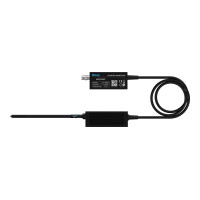
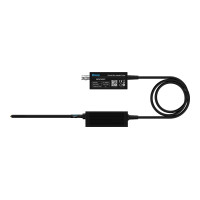
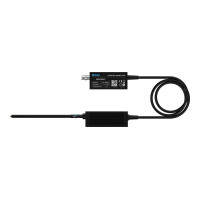
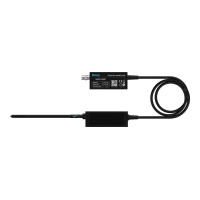
The following on-site test diagram shows Micsig's MHO3-5004 high-resolution oscilloscope, MOIP1000P optical isolation probe, DP1502 high-voltage differential probe, and the device under test.

On-site Test Setup
In double pulse testing, the optical isolation probe measures the upper arm Vgs. This module is the heart of the motor controller, with switching speeds typically in the nanosecond range. During testing, electromagnetic interference (EMI) generated by high-speed switching affects measurement results. The optical probe's high common-mode rejection ratio reveals the true signal integrity, providing clear waveforms even in high-interference environments.
Lower arm interference is relatively less severe, making differential probes sufficient for testing requirements. Current double pulse tests typically use 200MHz bandwidth differential probes with 1500V isolation. Since device pins are relatively thin, traditional current measurement methods may not directly measure chip pins. Therefore, we recommend using Micsig's RCP1200XS Rogowski coil for lower arm Id measurement - a non-contact current measurement solution that protects pins while enabling fast, accurate measurements.
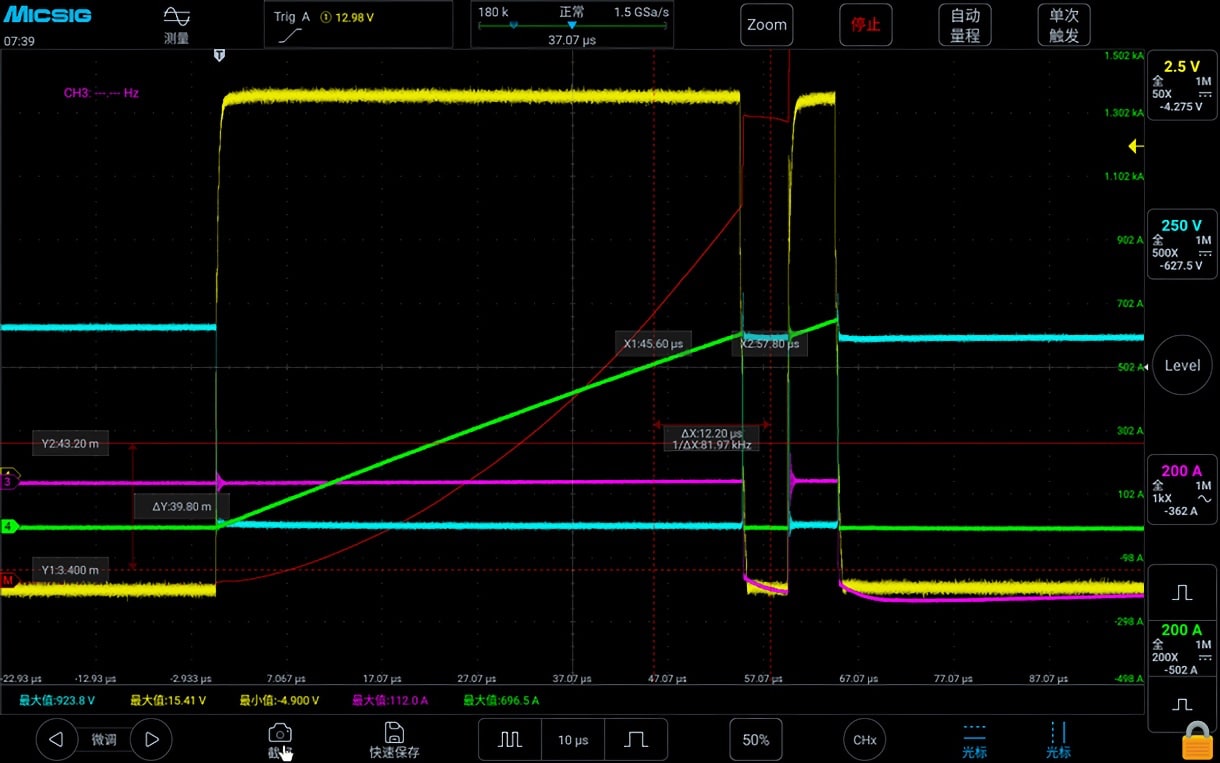
Let's examine actual measurement waveforms: The optical probe measures upper arm Vgs, differential probe measures lower arm Vds and Vgs, with Micsig's Rogowski coil RCP1200XS recommended for lower arm Id measurement.
Actual Measurement Waveforms
Customer Feedback
Previous double pulse tests showed significant common-mode interference in upper arm Vgs signals. Initial insufficient understanding of differential probes' CMRR led to trusting their results. Engineers believed oscillations were system design-related, leading to repeated circuit modifications without resolving the issue. After switching to Micsig's optical isolation probe, test results improved dramatically. The probe maintains high CMRR at high frequencies, eliminating waveform oscillations. Results now closely match theoretical analysis.
Conclusions
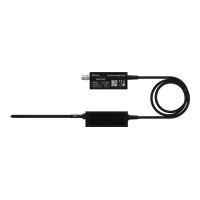
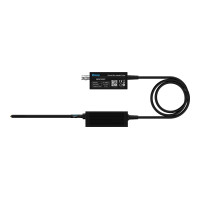
Micsig's MOIP1000P optical isolation probe offers up to 180dB common-mode rejection ratio (CMRR), maintaining over 100dB performance at 1GHz frequencies. This enables more precise and reliable circuit testing/validation in SiC/GaN-based designs. Engineers can capture true upper arm Vgs waveforms, accurately analyze circuit design compliance, and ensure high product performance and reliability.
About Micsig
Shenzhen Micsig Technology Co., Ltd. is a leading global developer and manufacturer of signal testing/measurement equipment, recognized as a national high-tech enterprise and specialized innovative company. Micsig remains at the forefront of signal testing innovation, particularly in oscilloscopes and probes, pioneering flat oscilloscopes and leading in optical isolation probe technology.
We adhere to our mission and vision, continuously pushing technological boundaries to help electronics professionals and organizations achieve greater efficiency and excellence.
Every innovation aims to product technical limits and explore new industry development possibilities.
Main products include: High-resolution oscilloscopes, flat oscilloscopes, automotive diagnostic oscilloscopes, modular oscilloscopes; Probe series: Optical isolation probes, high-voltage differential probes, flexible current probes (Rogowski coils), high/low frequency AC/DC current probes.









Leave a Comment