RIGOL PIA1000 Series Optical-fiber Isolated Probe Introduction
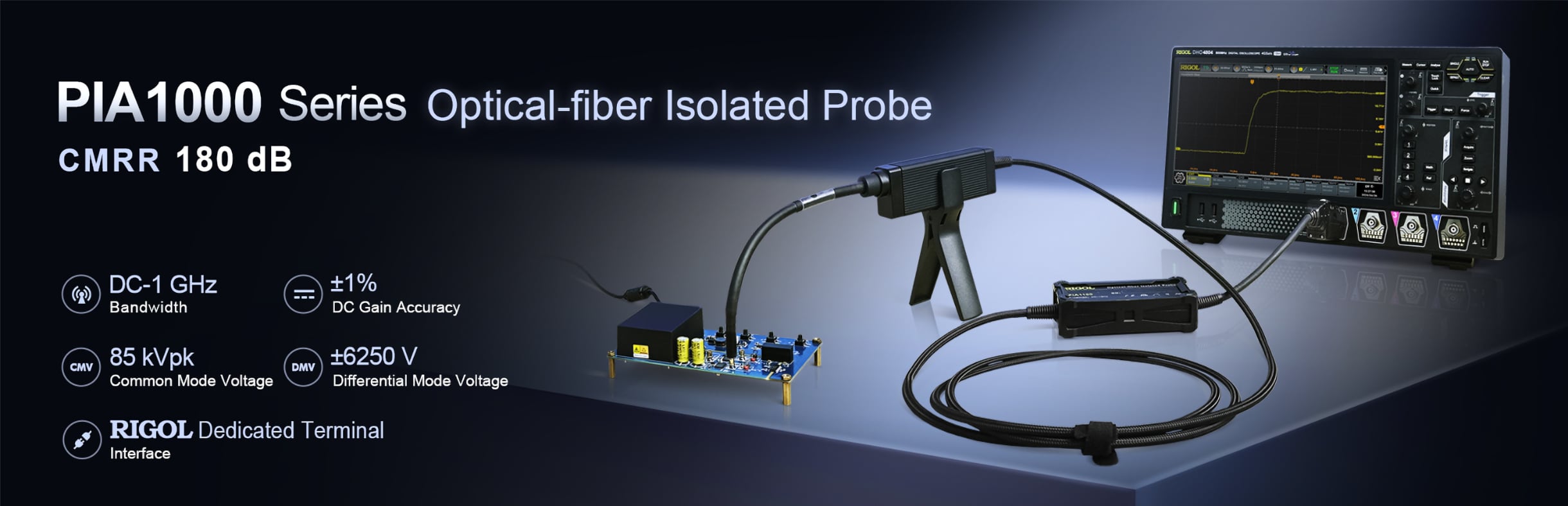
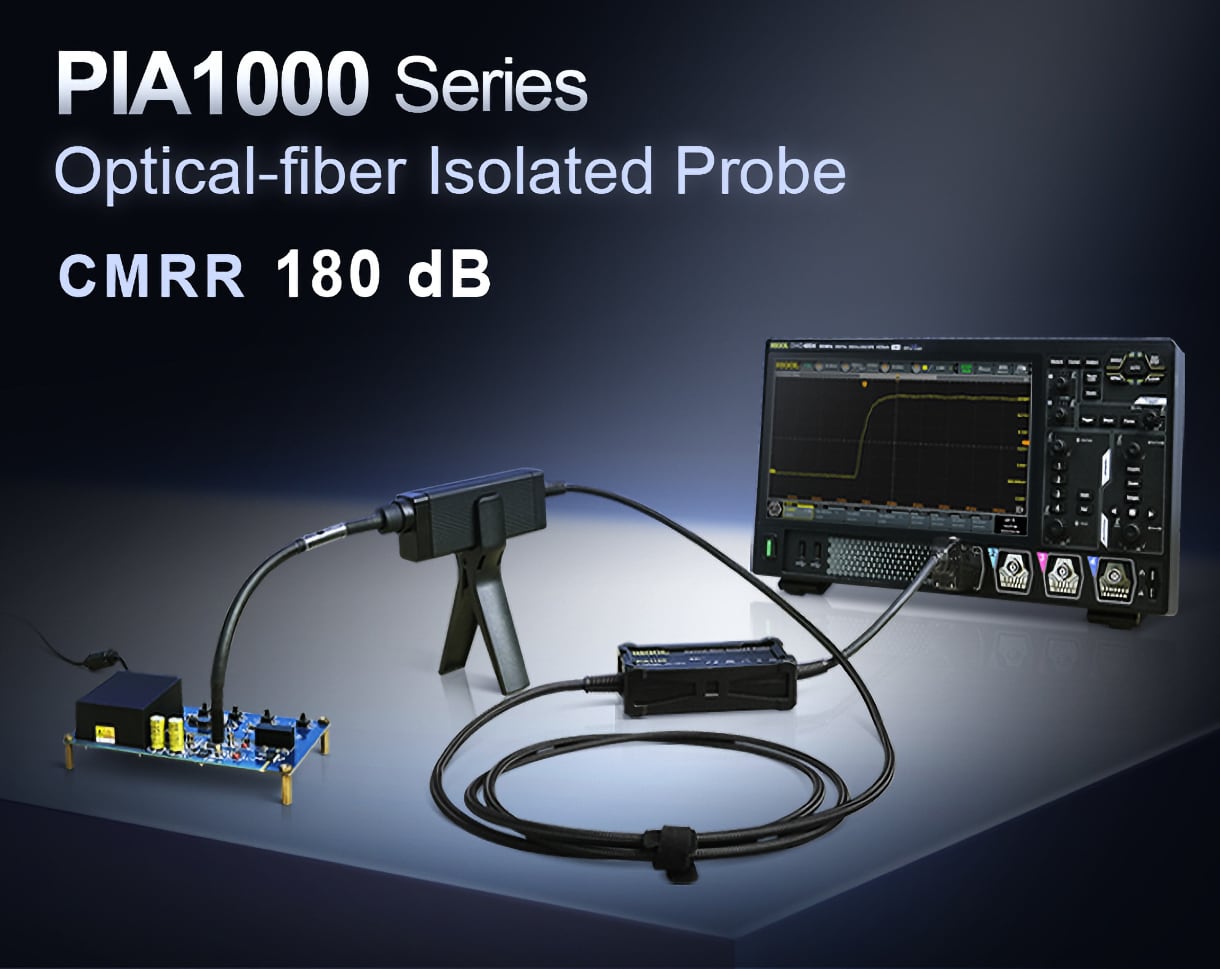
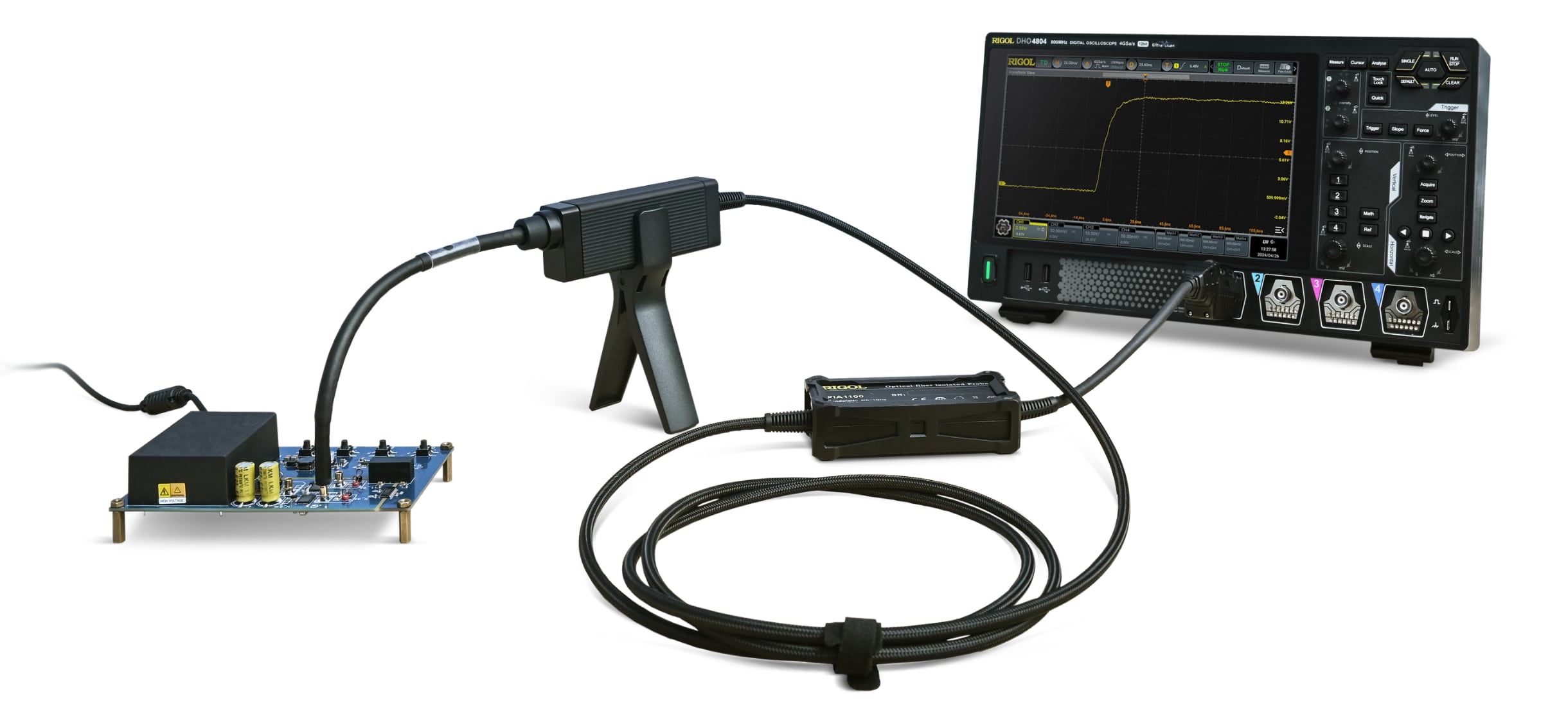
The RIGOL PIA1000 Series Optical-fiber Isolated Probe offers exceptional performance and safety tests with its excellent common mode rejection capability and high isolated voltage. It achieves full-scale output in the differential mode voltage range from ±0.01 V to ±2500 V with various attenuating tips. The PIA1000 is powered over laser, offering a perfect solution for isolated power supply. Besides, it is compatible with the auto-recognized interface of RIGOL oscilloscopes (e.g. MSO8000, DHO4000, MHO/DHO5000). It simplifies the operation and improves the user experience with immediate test.
Key Features:
- High bandwidth:
- Common mode voltage up to 85 kVpk
- Differential mode voltages from ±0.01 V to ±2500 V with different attenuating tips
- High CMRR, up to 108 dB at 1 GHz
- Fast response, immediate test after power-on with no warm-up time, 1% accuracy at DC Gain
Applications:
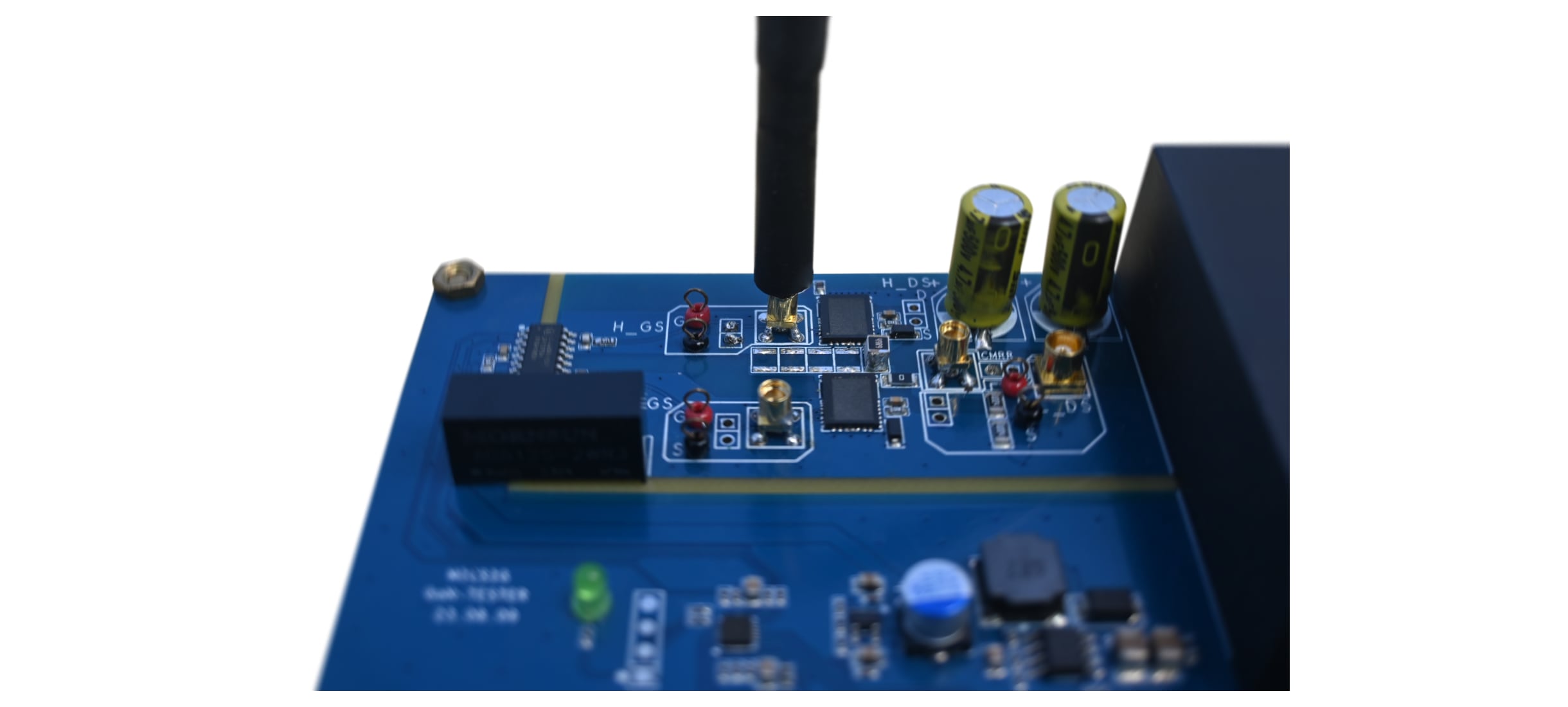
- Power device evaluation, current parallel measurement, EMI and ESD troubleshooting
- Motor drive design, power converter design, electronic ballast design
- Design and analysis of GaN, SiC, IGBT half/full bridge devices
- Test of inverters, UPS, and switching power supplies
- Safety isolation test for high voltage, high bandwidth test applications
- Wide voltage, wide band test applications
- Floating measurements
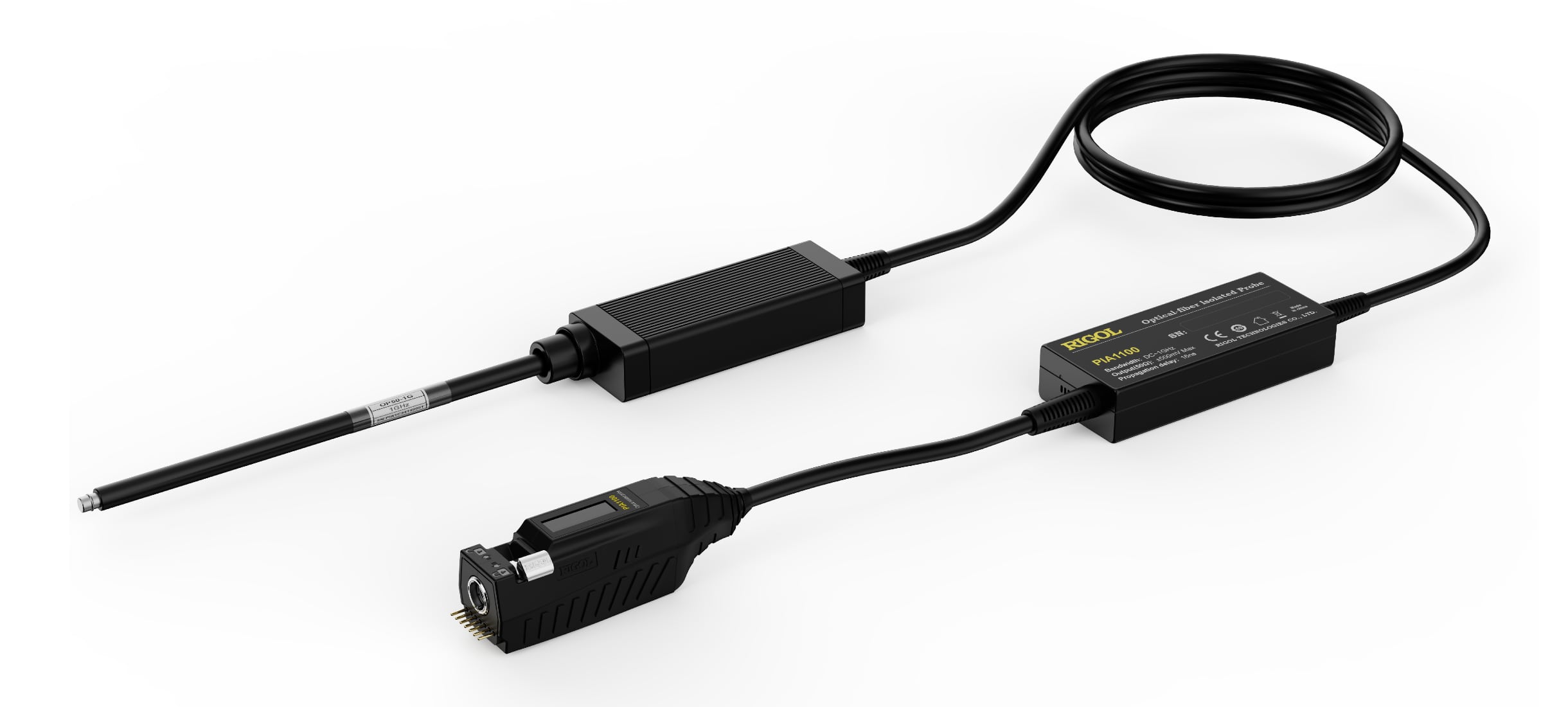
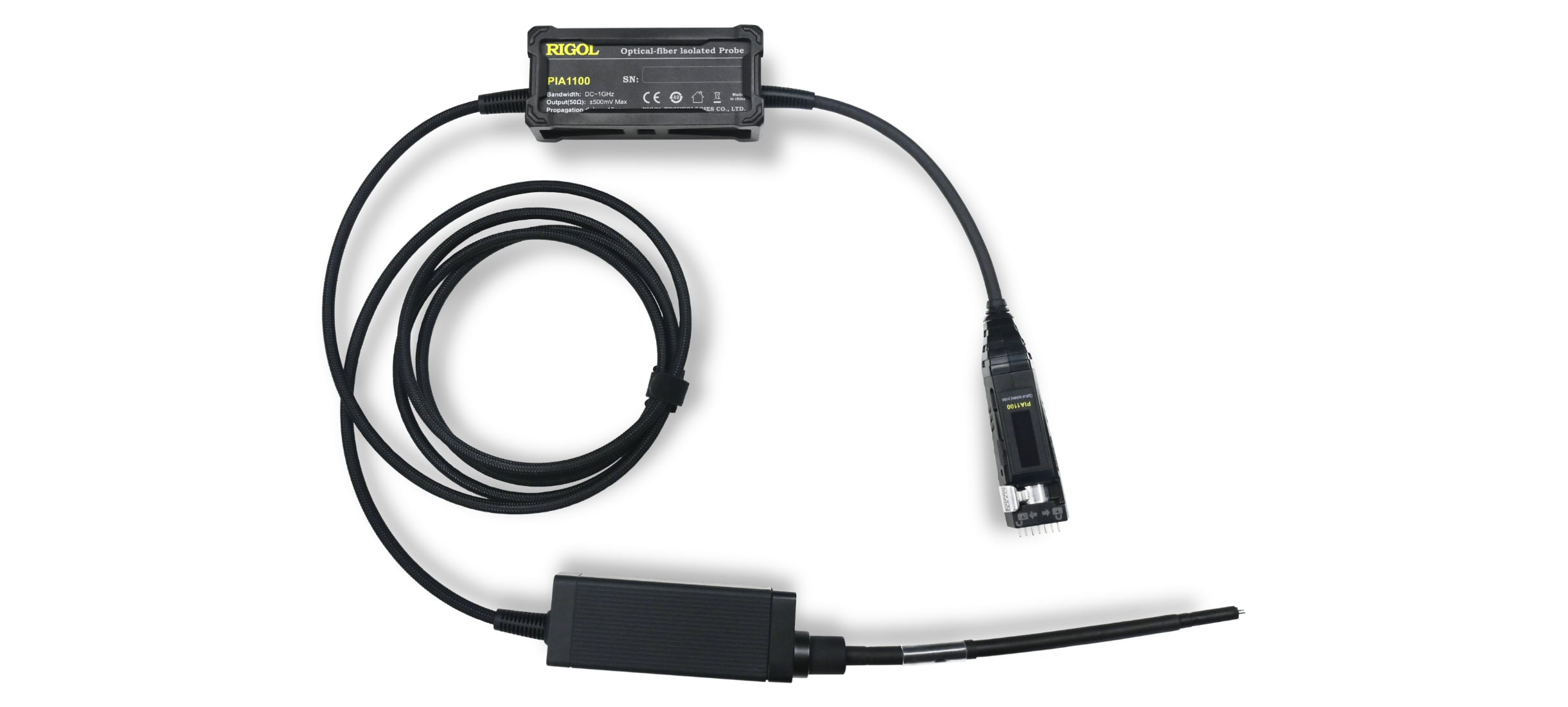
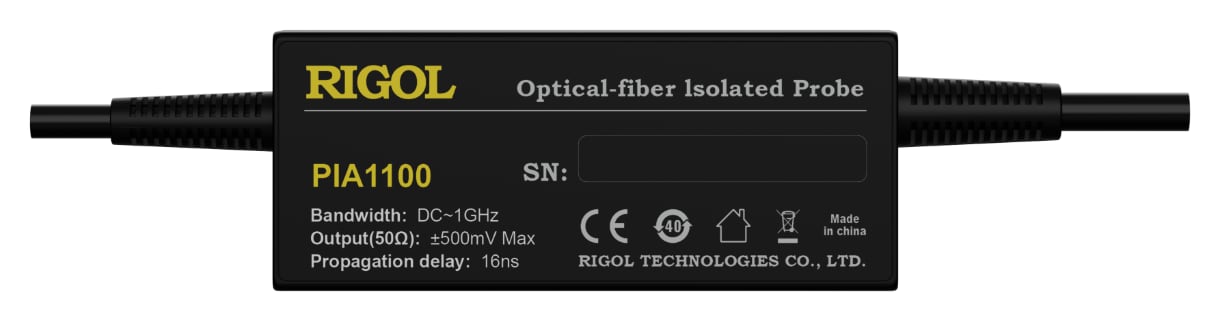
Electrical-Optical Converter
The Electrical-Optical converter converts the electrical signal under test into an optical signal and transmits it via optical fiber to the Optical-Electrical converter. The Electrical-Optical converter of the PIA1000 series is powered over fiber, no additional power supply required.
Optical-Electrical Converter
The Optical-Electrical converter can restore the optical signal transmitted by the Electrical-Optical converter to an electrical signal and input it to the oscilloscope via the probe controller.
Probe Controller
The probe controller can be connected to the input interface of the RIGOL oscilloscope. You can use it to power the probe, set up communication, and set the attenuation ratio. Besides, the controller also provides a Type-C interface via which you can apply the power source (PD, 12 V, 3 A) to power the probe. The probe controller is as shown in the figure below.
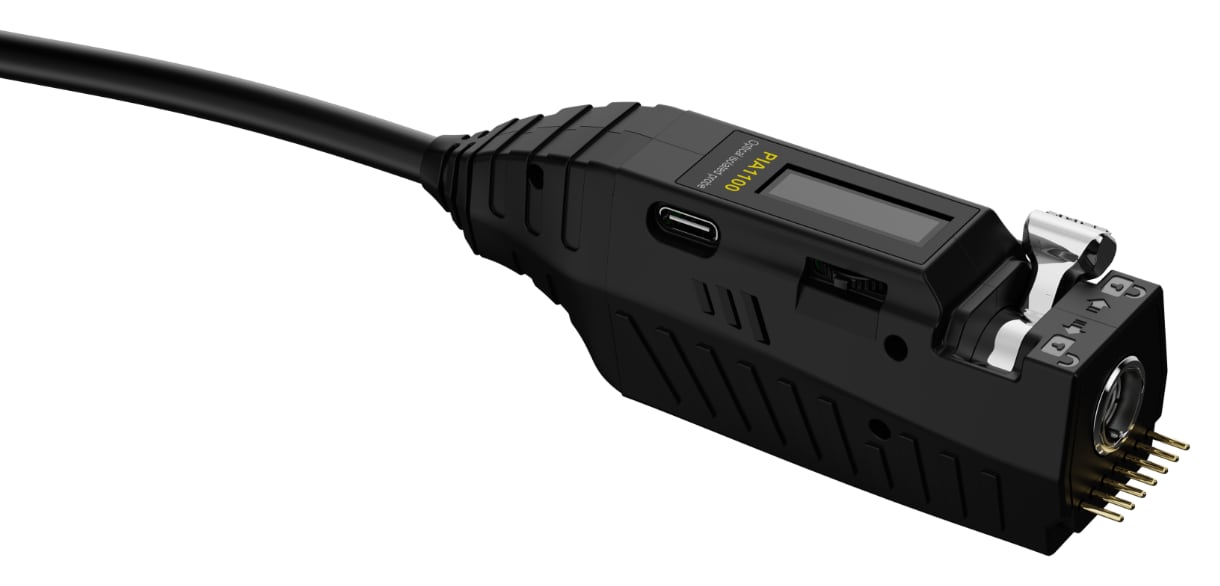
- 0.91'' probe display, used to display the measurement information and the prompt message.
- Locking lever. Push the lever to lock or unlock the connection between the probe and the oscilloscope interface.
- Probe output connector, used to connect the input interface of the oscilloscope.
- Thumbwheel switch. Scroll the thumb wheel to switch between functions of probe attenuation, probe calibration, and probe restart on the probe display. Press the thumb wheel to confirm the selection.
- Type-C interface, used to connect the power source (PD, 12 V, 3 A) to power the probe. Using the Type-C interface to power the probe will disconnect the power supply from the oscilloscope.
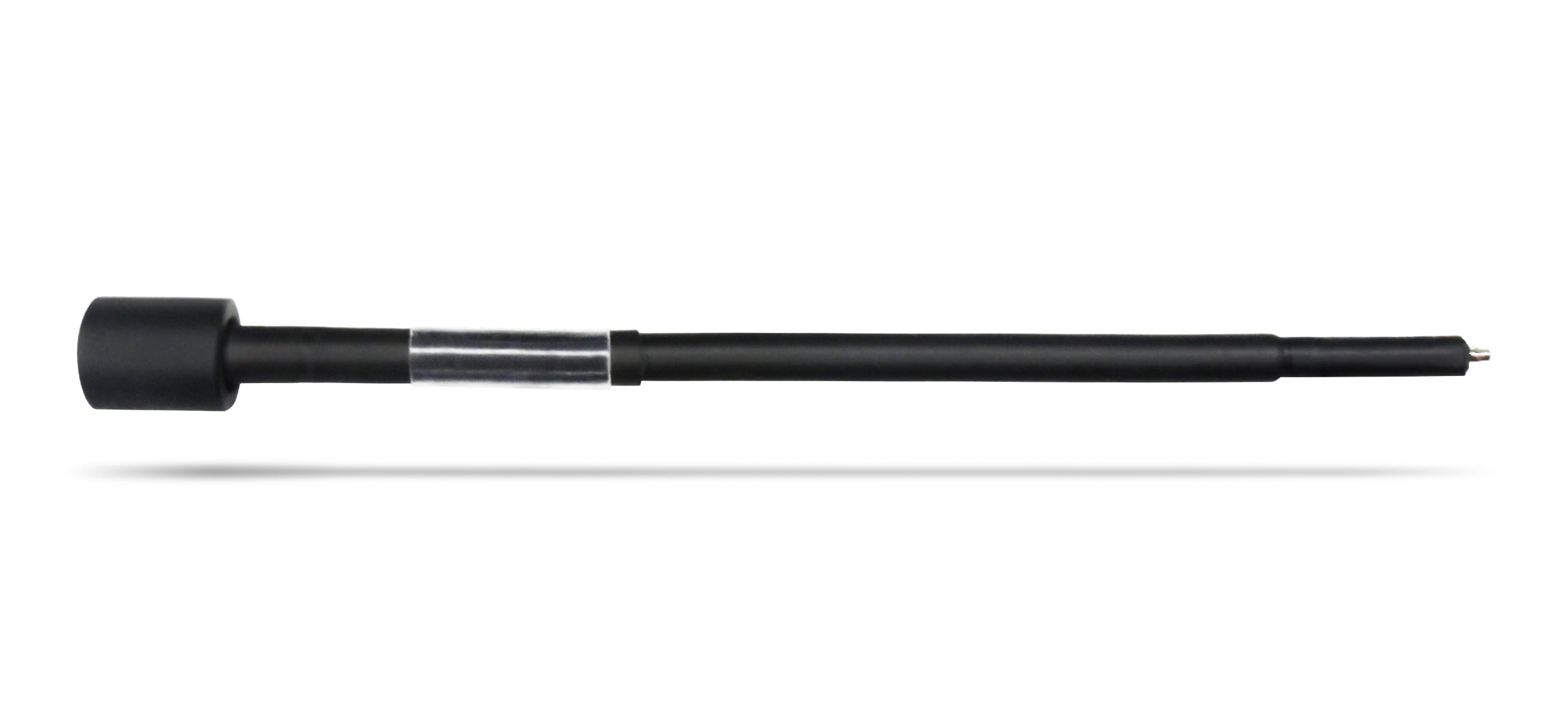
Attenuating Tip
The attenuating tip is used to connect the Electrical-Optical converter to the DUT. To avoid the possible damage to the equipment, you must use an attenuating tip instead of connecting the Electrical-Optical converter directly to the circuit.
The PIA1000 Series Optical-fiber Isolated Probe includes the following models:
| Model |
PIA1020 |
PIA1050 |
PIA1100 |
| Bandwidth |
200 MHz |
500 MHz |
1 GHz |
| Rise Time |
≤1.75 ns |
≤700 ps |
≤450 ps |
| CMRR |
DC: 180 dB
200 MHz: 122 dB |
DC: 180 dB
500 MHz: 114 dB |
DC: 180 dB
1 GHz: 108 dB |
| Propagation Delay |
18.5 ns (2 m fiber length) |
17.2 ns (2 m fiber length) |
17.2 ns (2 m fiber length) |
| Output Voltage Range |
±1.25 V |
±500 mV |
±500 mV |
| Noise |
≤2 mVrms@0 dB
≤400 μVrms@20 dB |
≤2.4 mVrms@0 dB
≤420 μVrms@20 dB |
≤2.4 mVrms@0 dB
≤420 μVrms@20 dB |
| Power Supply |
Power supply from the oscilloscope's probe interface or the USB-C interface |
| DC Gain Accuracy (Typical) |
1% |
| Common Mode Voltage |
85 kVpk |
| Certification |
IEC60825-1 |











Leave a Comment