
-
U heeft nog geen producten in uw winkelwagen.

U heeft nog geen producten in uw winkelwagen.
In 2026, the semiconductor industry faces a historic transition: from the automotive shift to the dominance of AI Data Centers. Discover the market impact and the challenges for testing and validation.
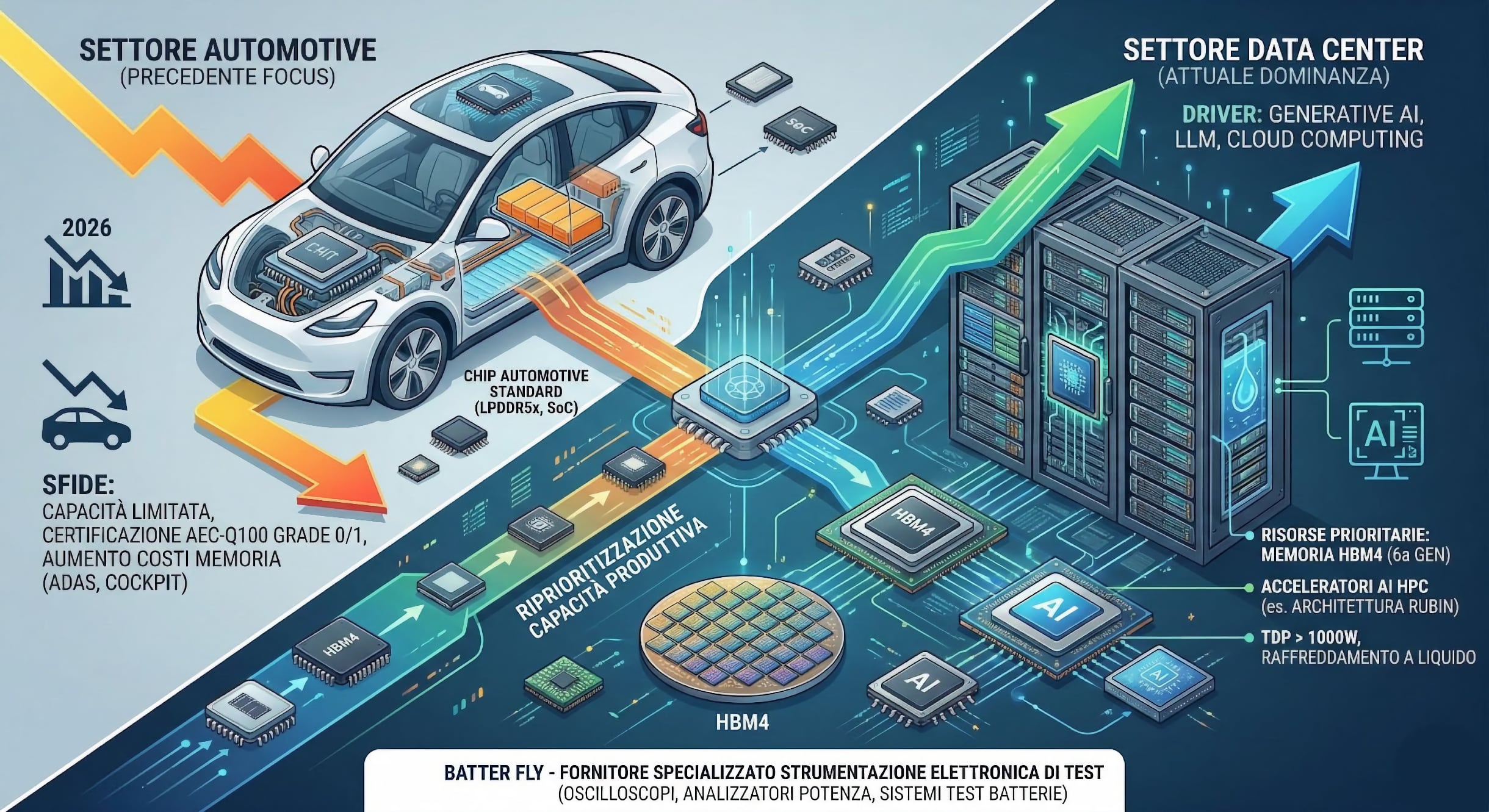
In the technological landscape of 2026, the semiconductor industry is undergoing an unprecedented phase transition. While the 2021-2023 period was characterized by the automotive supply chain crisis, the current paradigm sees a massive redirection of capital and manufacturing capacity toward Data Center infrastructure.
This shift is not just a matter of volume, but of a technological and financial divergence that is redefining R&D roadmaps globally.
1. Capacity Erosion: HBM4 and the "Crowding-Out Effect"
The primary driver of this shift is the explosion of Generative AI, which in 2026 is expected to generate approximately 50% of the total revenue for the entire chip sector. The most critical phenomenon for system engineers is the allocation of high-performance memory.
2. Architectural Divergence: High-Performance Computing (HPC) vs. AEC-Q100
While automotive Product Managers push toward Software-Defined Vehicles (SDV), they face limited availability of advanced nodes (<5nm) certified for the sector.
3. Validation and Testing Challenges for 2026
For R&D engineers, this transition introduces new complexities into validation cycles:
Conclusions: Navigating the Change
The 2026 semiconductor market rewards computational speed and energy efficiency for the cloud. For companies operating in this scenario — whether designing next-generation AI servers or integrating advanced SDV systems — precision in the characterization and debugging phase is the critical success factor in reducing Time-to-Market.
Technical Support and Instrumentation
In such a technically complex context, the choice of a technological partner for validation is fundamental. Batter Fly confirms its role as the specialized reference supplier for electronic test instrumentation, offering cutting-edge solutions (high-resolution oscilloscopes, precision power analyzers, and battery/power test systems) indispensable for supporting R&D departments in the challenges posed by new semiconductor standards.









Leave a Comment