
-
U heeft nog geen producten in uw winkelwagen.

U heeft nog geen producten in uw winkelwagen.
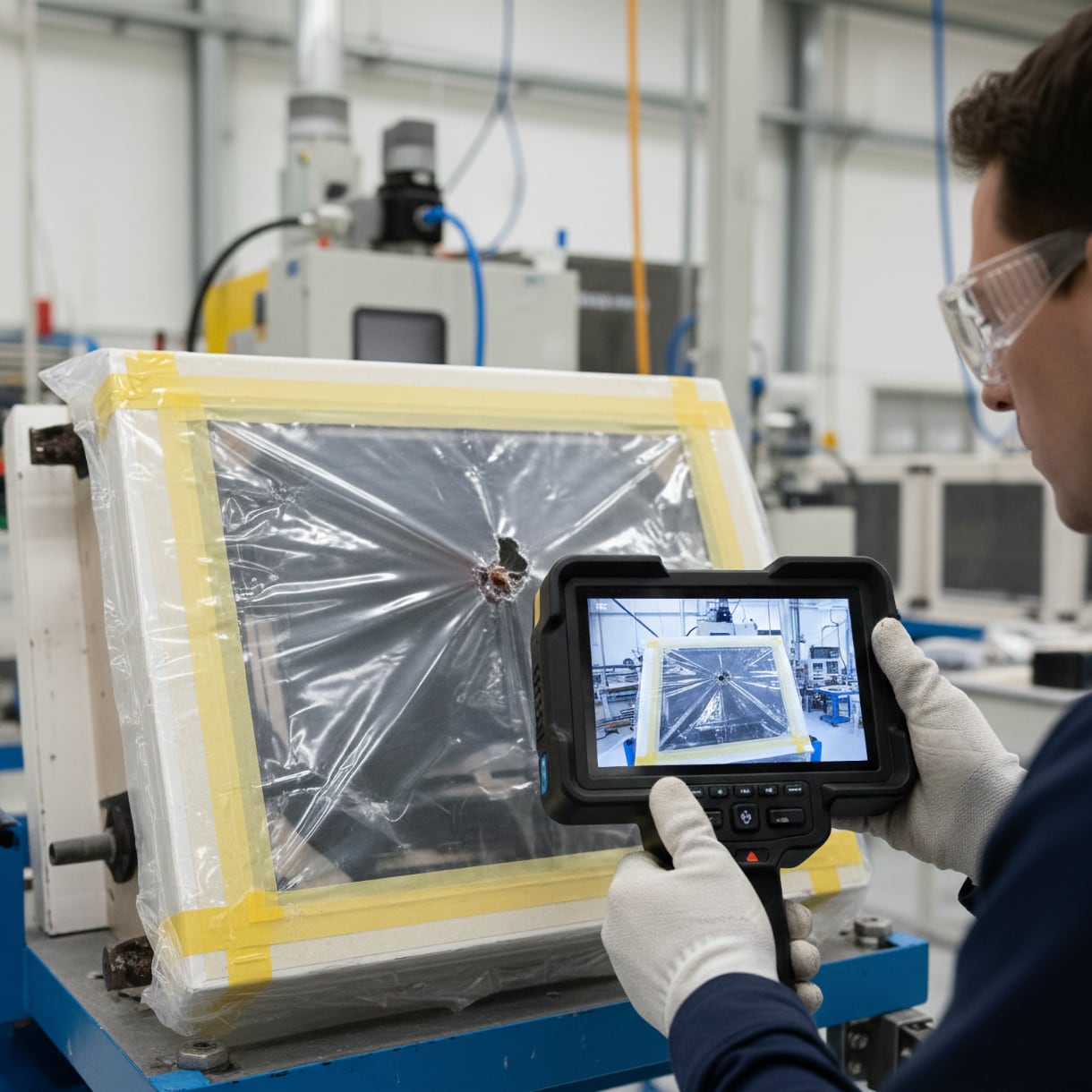
Discover how acoustic cameras revolutionize leak detection in vacuum bags for composite manufacturing. Locate micro-holes and defects quickly and accurately.
Introduction
In the composite materials manufacturing sector (aerospace, marine, automotive), the vacuum resin infusion process is critical. The presence of micro-leaks in the nylon bag compromises the structural integrity of the piece, causing porosity or dry spots. Locating these leaks in large components can be like looking for a needle in a haystack.
Acoustic cameras (or Acoustic Imagers) represent the solution of excellence, transforming the imperceptible noise of an air leak into a clear and immediate visual image.
Why Use Acoustic Technology?
Traditionally, leak detection is carried out using point-source ultrasonic devices or, worse, through human hearing and manual visual inspection. Here is why the acoustic camera is superior:
The Physical Principle: Turbulence and Ultrasound
When external air is sucked into the vacuum bag through a hole (even a microscopic one), a transition from a high-pressure area to a low-pressure area is created. This transition generates turbulence.
This turbulence emits high-frequency sound waves, predominantly in the ultrasonic range (above 20 kHz). Acoustic cameras use an array of dozens of MEMS microphones to calculate the delay with which the sound hits each sensor, triangulating the exact position of the sound source.
Step-by-Step Inspection Guide
1. Preparation and Camera Setup
2. Panoramic Scanning
3. Localization and Zoom
Once an acoustic "heat spot" is identified on the screen (often represented as a colored circle), move closer to define the exact point of rupture.
Note: Sound can bounce off the metallic surfaces of the mold. If you see a suspicious signal, change the angle slightly: if the "spot" moves, it is a reflection; if it remains fixed on the bag, it is a real leak.
4. Validation and Repair
Analysis of Results
| Leak Type | Visual Signal | Common Cause |
|---|---|---|
| Micro-hole in nylon | Small and intense point | Improper handling or dropped tools. |
| Leak in Tacky Tape | Diffuse signal along the edge | Dirty mold surface or tape not pressed well. |
| Valve Leak | Concentric circle on the flange | Worn or off-center valve gasket. |
To identify micro-leaks in a vacuum bag (vacuum bagging), not all acoustic cameras are created equal. The "acoustic signature" of a vacuum leak is extremely weak and high-frequency compared to a compressed air leak.
1. Crucial Technical Specifications
| Feature | Minimum Recommended Specification | Why It Matters |
|---|---|---|
| Number of Microphones | At least 64 (preferably 124+) | More microphones increase spatial resolution and the ability to distinguish the leak from ambient noise. |
| Frequency Range | 2 kHz - 65 kHz (or higher) | Leaks in nylon bags often resonate between 30 and 50 kHz. A 20 kHz limit would miss the most useful signal. |
| Sensitivity (Threshold) | < 0.005 l/min at 5 bar / 0.5m | Must be able to detect microscopic holes (pinholes) even with low pressure differentials. |
| Field of View (FOV) | 62° or higher | A wide FOV allows scanning large molds (aircraft wings, hulls) in a single pass. |
2. Essential Software Features
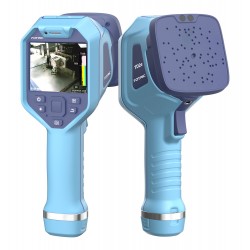
3. Form Factor and Usability
Conclusions
Integrating an acoustic camera into the infusion process drastically reduces setup times and minimizes the risk of costly scrap. In a sector where the cost of materials and labor is high, the ability to "see the vacuum escaping" is a fundamental competitive advantage.








Leave a Comment