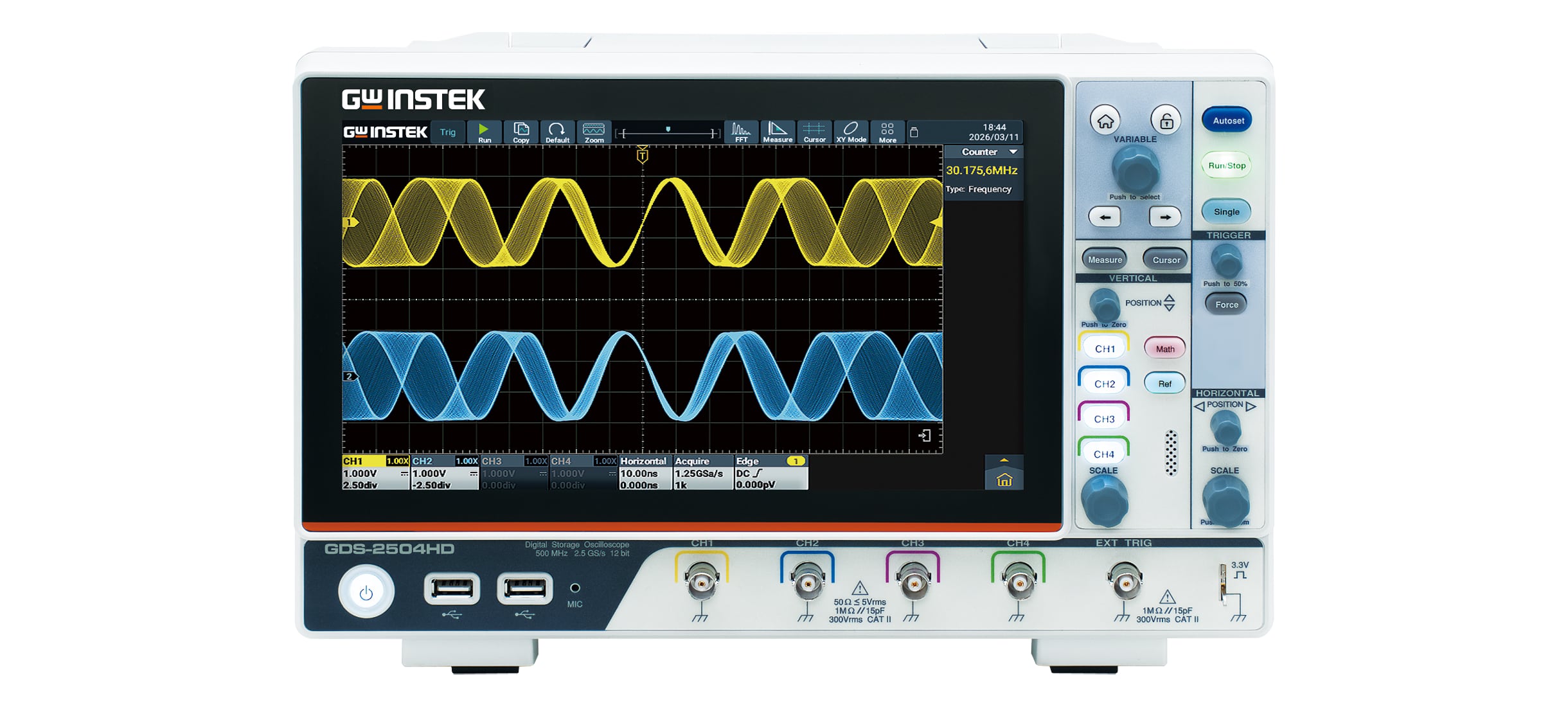
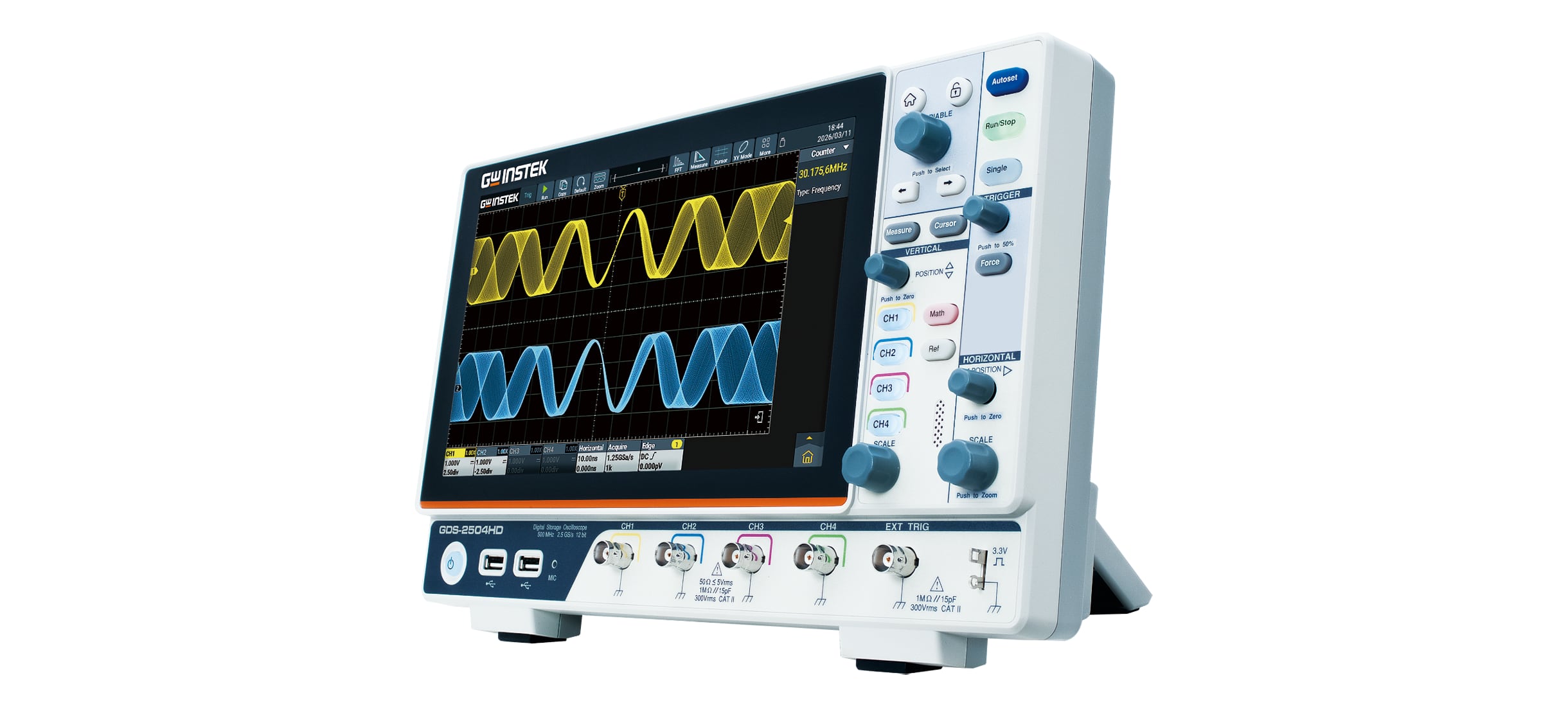
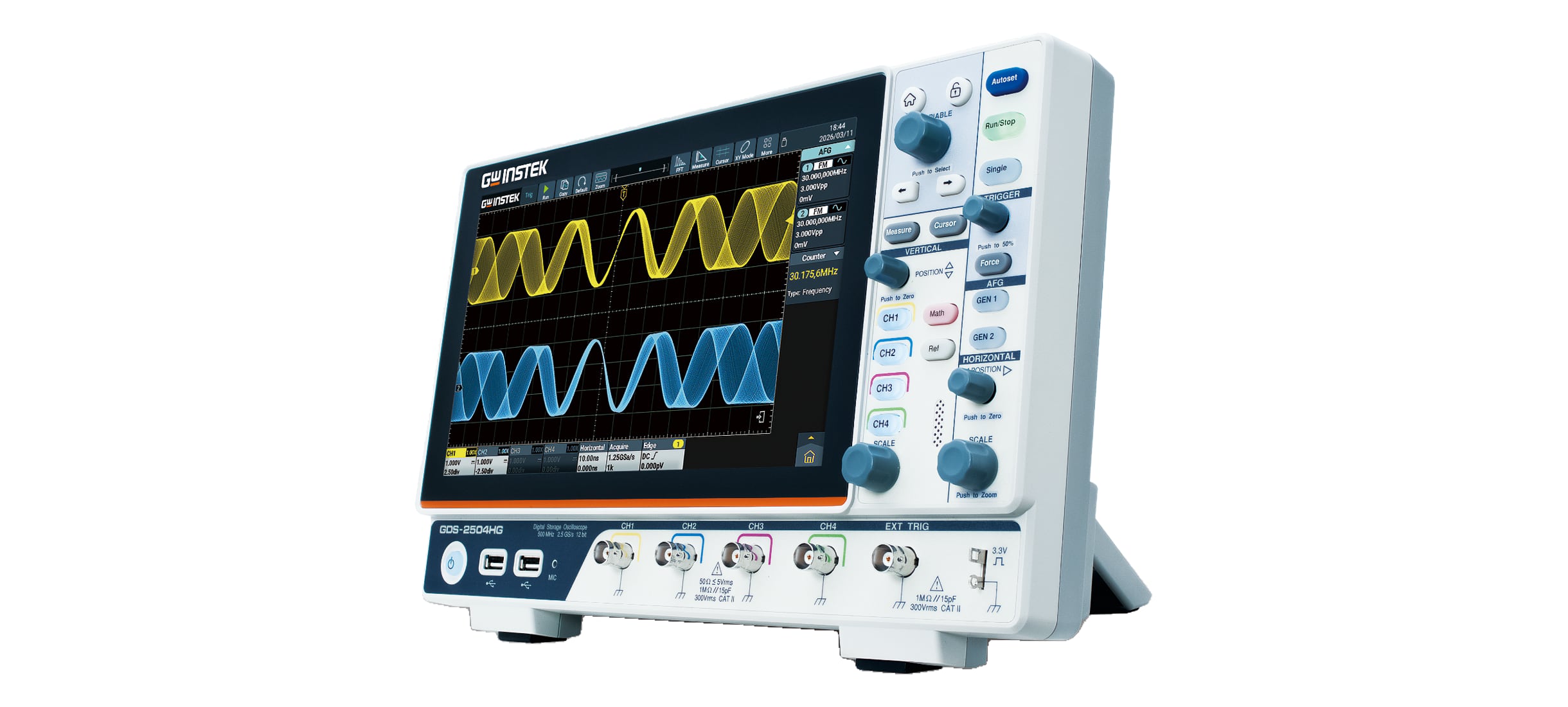
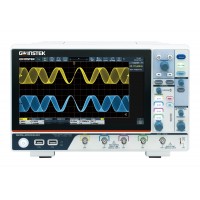
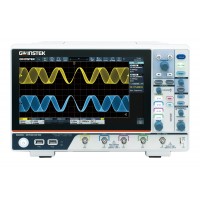
The GW Instek GDS-2000HD and GDS-2000HG digital oscilloscope series is designed to meet the needs of any application scenario. From research laboratories requiring extreme precision to educational environments or field applications where compactness and reliability are essential, this range combines top-tier performance with a smart user interface based on the Android operating system.
Uncompromising performance
The true strength of the GDS-2000HD/HG series lies in its advanced hardware architecture. The availability of a 12-bit analog-to-digital conversion (ADC) allows signals to be measured with a significantly higher level of detail compared to traditional 8-bit oscilloscopes. This means capturing minute voltage variations, which are fundamental when analyzing complex power supplies, biological signals, or small electromagnetic disturbances.
- 12-bit Hardware Resolution: Extreme precision and vertical accuracy (up to ≥ 5 mV ± 1.5%).
- Optimized Bandwidth: Available in 250 MHz, 350 MHz, and 500 MHz versions.
- Ultra-Fast Sampling: Up to 2.5 GSa/s maximum real-time sampling rate to capture transient details at ultra-high speed.
- Deep Memory: Record length up to 500 Mpts per channel in 350 and 500 MHz models (up to 100 Mpts in 250 MHz models), ensuring long-term acquisitions without sacrificing time resolution.
- Advanced Spectral Analysis: 1-million-point FFT functionality for precise frequency investigations.
Integrated Measurement Tools and Smart Experience
Designed to simplify and speed up workbench operations, the instrument is not limited to standard acquisitions alone. The unique Android-based ecosystem makes operation extremely intuitive and easy to learn, integrating 11 system languages.
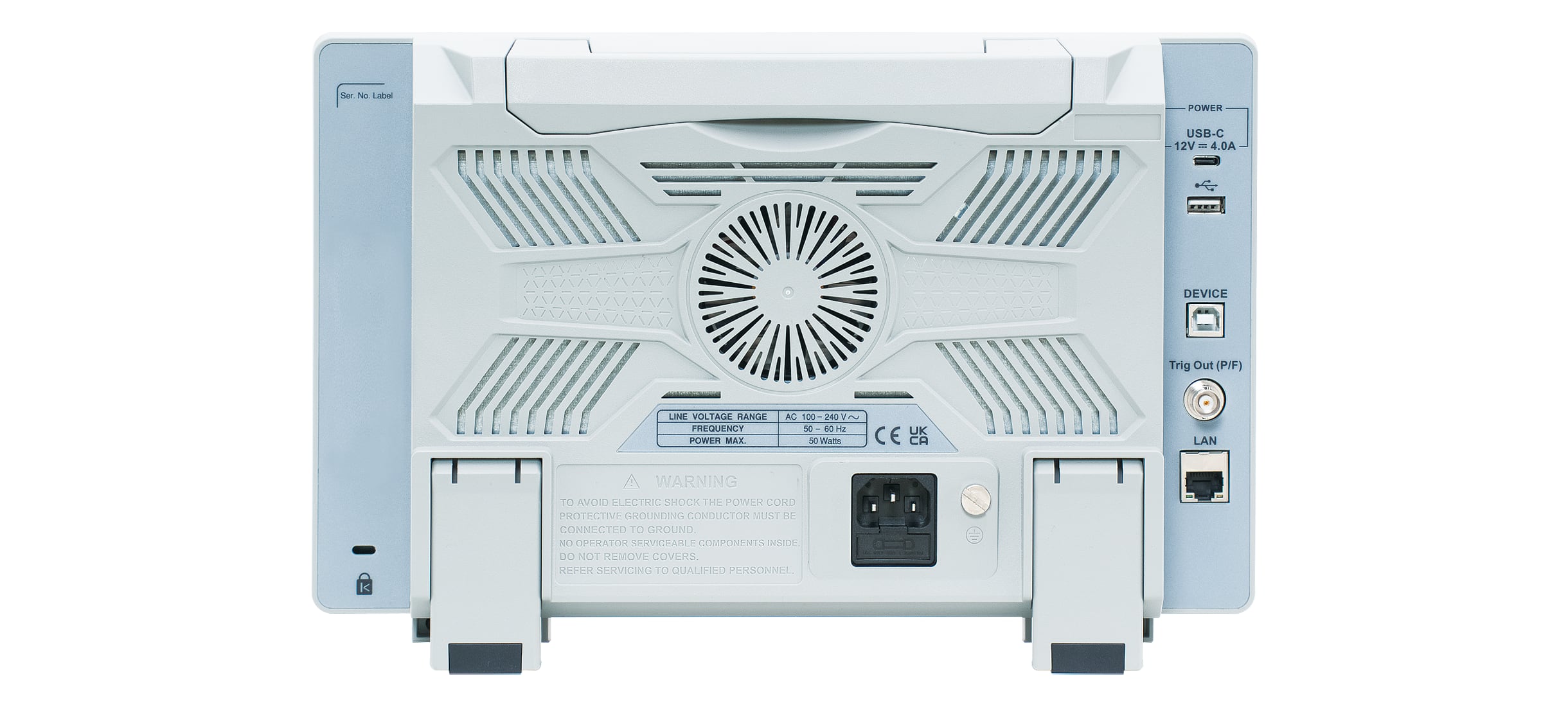
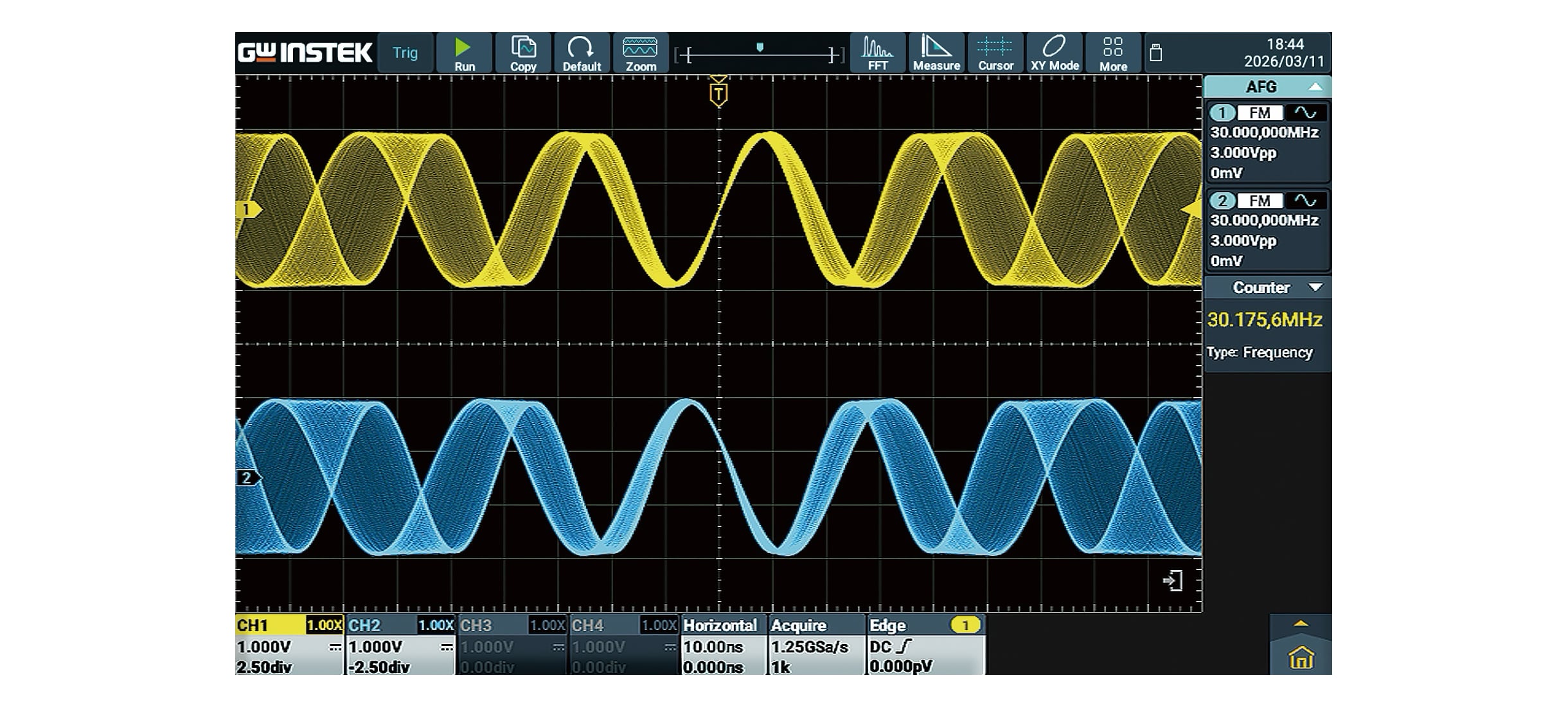
Within the compact chassis is a comprehensive suite of tools designed to minimize human error and provide immediate data. Indeed, we find a built-in digital voltmeter (DVM), a 6-digit frequency counter, and customizable digital filters. In addition to featuring 14 different trigger types, the oscilloscope offers standard decoding and triggering for the most common serial buses, including RS232/UART, I2C, SPI, CAN, and LIN, accompanied by 43 automatic measurement parameters complete with statistical tracking.
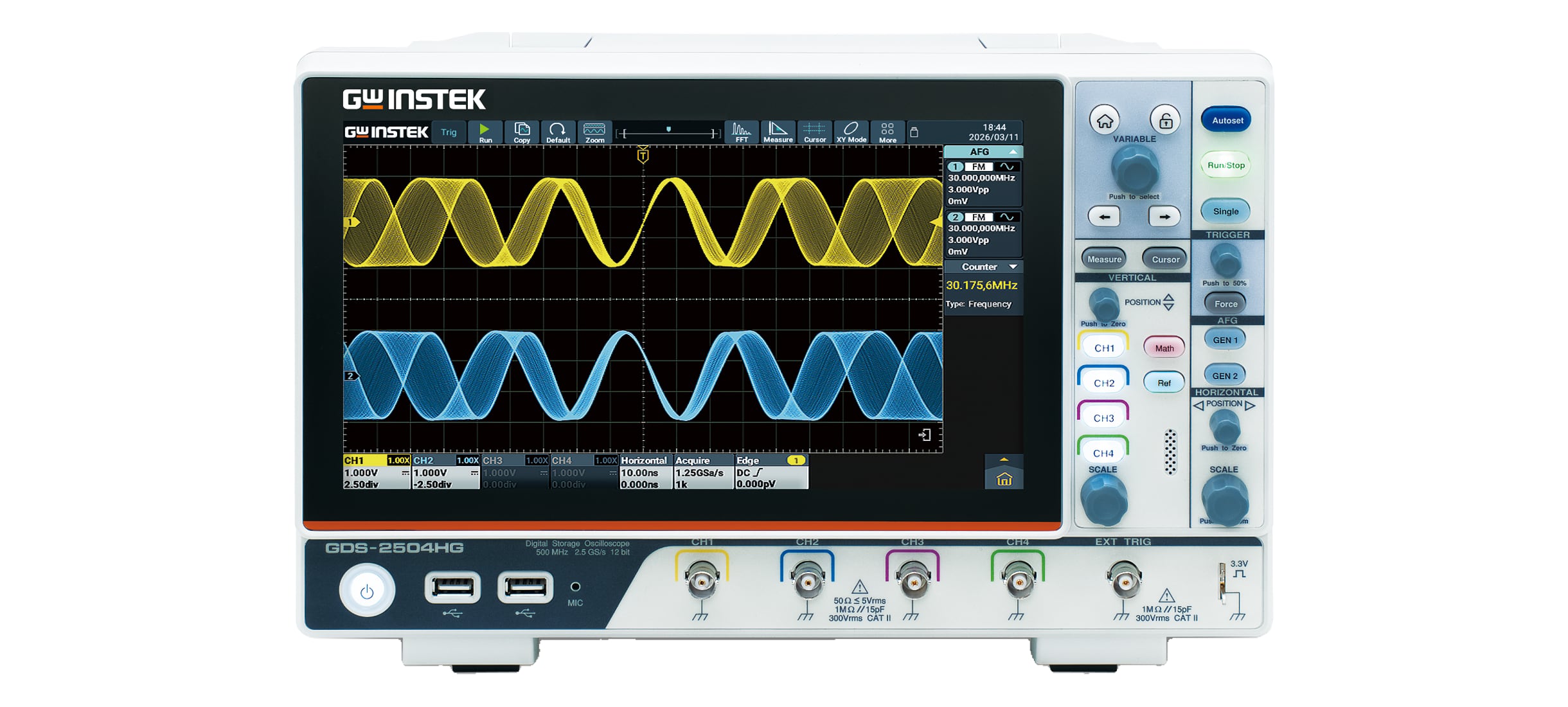
In-Depth: The "HG" Models with Integrated AFG Generator
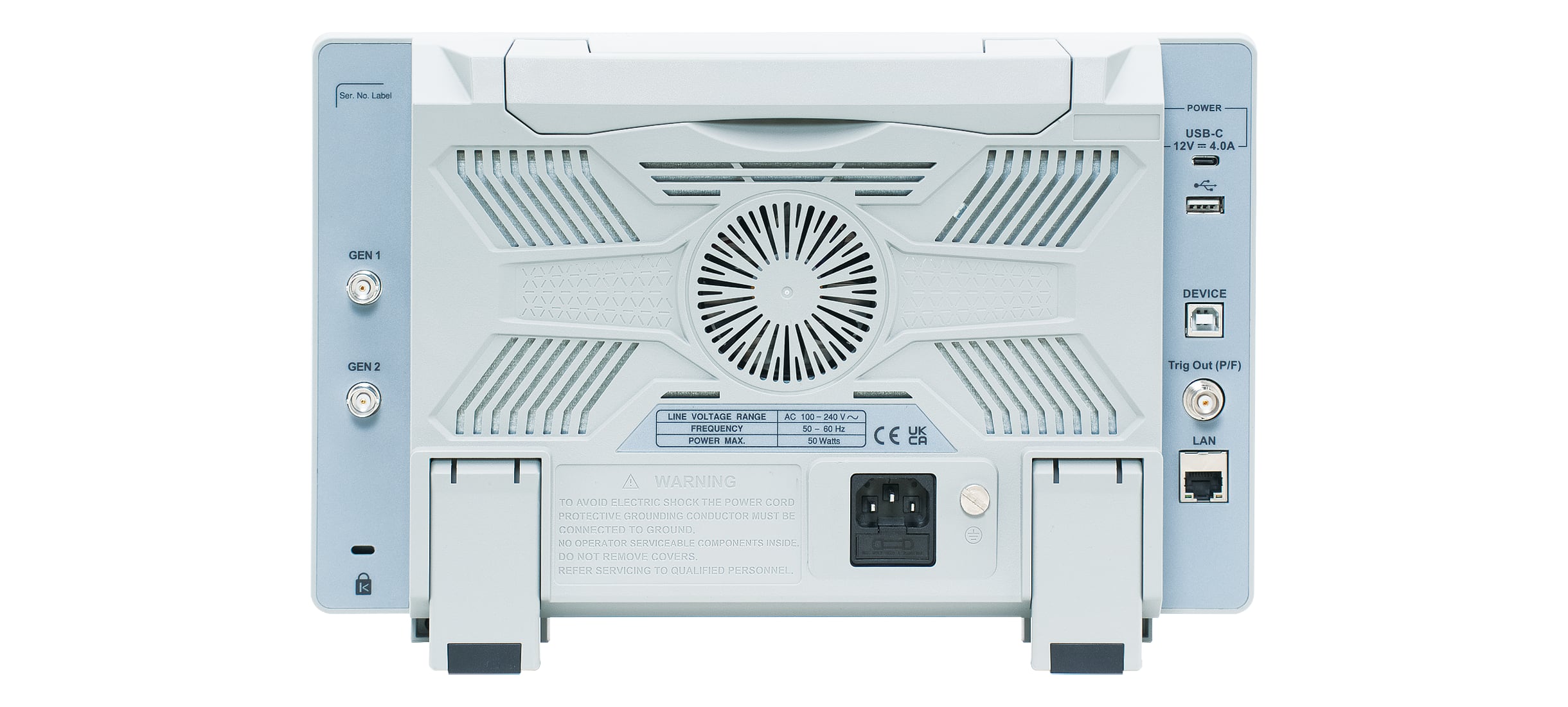
The "HG" series models (GDS-2504HG, GDS-2354HG, GDS-2254HG) stand out for including a built-in 2-channel 25 MHz Arbitrary Function Generator (AFG). This feature transforms the oscilloscope into a complete and extremely compact testing station.
The AFG generator allows for the output of both standard waveforms (such as sine, square, ramp, pulse, and noise) and the generation of custom arbitrary waveforms directly from the device. The integration of an AFG proves invaluable in research and development or education: it allows, for example, simulating output signals from a sensor, injecting controlled noise to test circuit robustness, or plotting Bode plots to evaluate the frequency response of filters. Having the AFG directly integrated into the oscilloscope chassis not only saves valuable workbench space but also eliminates the need to invest in separate additional instrumentation.
Model Comparison: GDS-2000HD/HG Series
| Model |
Bandwidth |
Channels |
Max. Memory |
Max. Sampling |
AFG Generator |
| GDS-2504HD |
500 MHz |
4 Channels + EXT |
500 Mpts / Ch |
2.5 GSa/s |
No |
| GDS-2354HD |
350 MHz |
4 Channels + EXT |
500 Mpts / Ch |
2.5 GSa/s |
No |
| GDS-2254HD |
250 MHz |
4 Channels + EXT |
100 Mpts / Ch |
2.5 GSa/s |
No |
| GDS-2504HG |
500 MHz |
4 Channels + EXT |
500 Mpts / Ch |
2.5 GSa/s |
Yes (2 Channels, 25 MHz) |
| GDS-2354HG |
350 MHz |
4 Channels + EXT |
500 Mpts / Ch |
2.5 GSa/s |
Yes (2 Channels, 25 MHz) |
| GDS-2254HG |
250 MHz |
4 Channels + EXT |
100 Mpts / Ch |
2.5 GSa/s |
Yes (2 Channels, 25 MHz) |










Leave a Comment